Table of Contents
Crowd Orchestration - ScanGo | Report
The following report is about Crowd Orchestration and the logo for our product can be seen in Figure 1.

Author(s):
- Bruno Pires
- Maja Perek
- Cristian Ionescu
- Ewa Ladka
- Bleuenn Fohanno
Acknowledgement
The team would like to thank the Instituto Superior de Engenharia do Porto (ISEP) for making their facilities available to us, and the teachers of the European Project Semester (EPS) for sharing their experience with us during this semester. We are grateful for the opportunity to participate in this project.
Glossary
Table 1 shows the abbreviations for the most common expressions used throughout the report.
| Abbreviation | Description |
|---|---|
| 3D | Three-dimensional |
| 4Ps | Product, Price, Place, Promotion |
| ABS | Acrylonitrile butadiene styrene |
| APM | The Association of Project Management |
| C2C | Cradle to Cradle |
| CAGR | Compound Annual Growth Rest |
| EMC | Electromagnetic Compatibility Directive |
| EPS | European Project Semester |
| EU | European Union |
| GSMA | Global System for Mobile Communications Association |
| IDE | Integrated Development Environment |
| IoT | Internet of Things |
| ISEP | Instituto Superior de Engenharia do Porto |
| LiFePO4 | The Lithium Iron Phosphate |
| LVD | Low Voltage Directive |
| NFC | Near Field Communication |
| NiMH | Nickiel-Metal Hybride |
| NSPE | National Society of Professional Engineers |
| OC | Oral Communication |
| OLED | Organic Light Emitting Diodes |
| PET | Polyester Terephthalate |
| PLA | Polilaktyd |
| QR | Quick Response |
| RAM | Responsiblity Assignment Matrix |
| RFID | Radio Frequency Identification |
| RICS | The Royal Institute of Chartered Surveyors |
| ROHS | Restriction of Hazardous Substances |
| SCRUM | Framework for Project Management |
| STP | Segmentation, Targeting, Positioning |
| UK | United Kingdom |
| USB | Universal Serial Bus |
| VAT | Value-added tax |
| WBS | Restriction of Hazardous Substances |
1. Introduction
European Project Semester is a program for international students who have completed at least two years of study. EPS is a mix of problem based learning and “Project Related Courses”. In this chapter it will be presented our team members, description of the problem and our main objectives. Our topic is crowd orchestration, crucial theme in keeping people safe and avoiding overpopulation. Figure 2. shows the logo of the European project.

1.1 Presentation
Our team consists of 5 students from 4 different countries, namely Portugal, France, Romania and Poland. Our main mission is to make team work our main strength in order to create a positive work environment and achieve all established goals. In this sense, our main objective is to carry out a project that helps to organize events (in this case festivals) and in this way that overcrowding is avoided as much as possible, which is quite desirable nowadays due to the pandemic. All team members are from different areas of study and we will make this one of our greatest strengths, taking advantage of the different experiences, knowledge and skills of each one. During these 5 months we will do our utmost to obtain the desired results and carry out a good project. Table 2 displays the team members and Figure 3 presents them.
| Student | Faculty | Field of Study |
|---|---|---|
| Bruno Pires | Instituto Superior de Engenharia do Porto | Mechanical Engineering |
| Maja Perek | Lodz University of Technology | Biotechnology |
| Cristian Ionescu | Politechnica University of Bucharest | Industrial Design Engineering |
| Ewa Łądka | Lodz University of Technology | Business and Technology |
| Bleuenn Fohanno | ESIReims | Packaging Engineering |

1.2 Motivation
In order to carry out the project successfully, it is essential that all members of the team, along this path, are motivated and determined to work, both individually and collectively. Throughout this journey we will gain new knowledge in several areas in addition to Engineering, such as: Marketing, Project Management, Programming, Energy, etc. Obviously, being an European project, we will also develop the English language, since it is the language with which we communicate among the team and with teachers. On the other hand, we are motivated to produce a product that effectively helps people, especially in this complicated phase that we are experiencing with the pandemic.
1.3 Problem
Nowadays there are immense events held daily and many are disorganized and overcrowded. Specifically at festivals, people often end up not seeing concerts or other activities due to this lack of organization. On the other hand, they also get lost from their friends due to the great confusion that exists in the space or wait a long time to go to the bathroom or buy something in a restaurant / bar, etc. In this sense, in the face of these problems and due to the current situation of the pandemic, we feel that should exist a product on the market that helps, in some way, to better organize these events.
1.4 Objectives
Our main objective is to provide people with the maximum possible security at different festivals or related events, avoiding overcrowding and disorganization. In this sense, with the proposed product people will obtain information that will allow them to go to the area / venue of the festival and even suggestions for alternative activities that may be taking place.
1.5 Requirements
We have defined some requirements in order to achieve all of our objectives. In this sense, we define the requirements in sub-categories: Initial Requirements: - Use inexpensive materials; - If applicable, we must follow EU Directives standards:
- Machine Directive [1]
- Low Voltage Directive [2]
- Electromagnetic Compatibility [3]
- Restriction of Hazardous Substances in Electrical and Electronic Equipment Directive [4]
- Radio Equipment Directive [5]
- Use the International Units System Guide [6]. Usability requirements: - Easy to use for the users; - The user must have a mobile phone (smartphone); Functional requirements: - It must effectively help the organization; - It needs to preserve the privacy of each user; - It will need to have acess to the internet for users to start receiving the information needed; - Adopt open-source software and technologies; - Encrypt data. Limitations: - The budget for building the prototype of our product is only 100 €, which limits the whole process.
1.6 Envisaged Tests
In order to test the product, we must carry out several tests throughout the building of the prototype. In this way, we will eliminate the uncertainties that exist and find problems that were not detected in the “theoretical” and initial part of the project. So we should do tests like: - Test whether people's privacy is exposed and this can be tested through questionnaires and after its study a conclusion is reached; - Check if the application is trustworthy and for that we will compare the organization of a festival with the use of this product and the organization of another without the use of the product; - Check and analyze the materials necessary for the use of the prototype, through a detailed study on the influence of the chosen materials in the environment in order to conclude if they are sustainable materials or if they harm the environment. These same materials can be tested by simulating forces and stresses; - Simulate an extreme case of overcrowding of people in an event and see how the application reacts, to check if it is overloaded or if it works well.
1.7 Report Structure
This project is organized in 8 chapters as can be seen in the Table 3.
| Task | Description |
|---|---|
| 1. Introduction | Presentation of the team, the project, the motivation, the problem to be solved and its requirements |
| 2. State of Art | Study of products that already exist in the market and analysis of their weaknesses and strengths |
| 3. Project Management | Documenting the progress that has been made over time and overview of the differents aspects of the project |
| 4. Marketing Plan | Identification of the product target and definition of the marketing strategy that will be used and applied in our solution |
| 5. Eco-efficiency Measures for Sustainability | It aims to achieve the sustainability of the project from social, economic and environmental implications |
| 6. Ethical and Deontological Concerns | Analysis of ethical challenges and limitation of the solutions proposed for our project |
| 7. Product Development | Design and prototype of the product and carrying out the final tests and their results |
| 8. Conclusion | Summary of all that has been said and achieved, stating what can be improved in the future |
2. State of the Art
2.1 Introduction
Crowd orchestration is the ability to monitor and, where necessary, direct a group of people to ensure their safety and improve their experience. Crowd management is used to ensure that a large gathering of people is controlled in an orderly and problem free-manner. However, crowd management is not only about the people, but it can also be about the people in cars and public transport. Crowd Orchestration intelligently solves any problem that involves organizing spaces, events, traffic [7]. Crowd orchestration consists of:
- a steady flow of crowds;
- preventing excessively dense crowds;
- creating a manageable public traffic flow;
- minimising risks;
- limiting the number of first aid occurrences, incident reports, and violent offences.
In the past, crowd management consisted in the usage of video footage and facial recognition to count the number of people in the given area, which were quite expensive methods of crowd orchestration. There are several types of cameras on the market and prices vary a lot, however, according to our budget (100 €) this type of material is very expensive, ranging from 500€ to 2000€ [8]. Nowadays, they are replaced by sensor technology.
2.2 Literature of Study
Before analyzing the products that already existed on the market, we studied and analyzed several research articles which you can find listed in the Table 4
| Title of Paper | Most Crucial Points | References |
|---|---|---|
| Improvising Harmony: Opportunities for Technologies to Support Crowd Orchestration | This article studies the growth of a population and tries to understand how it is organized in order to keep the tasks done. In this sense, there are 2 aspects to be studied here: project management and organization of event tasks. | [9] |
| GSMA Smart Cities Guide: Crowd Management | Uses for Crowd Management. These techniques can analyze the crowds and identify how to move and make plans. It also talks about loT sensors connected to the mobile phone network. On the other hand, considers also car traffic. In short, it analyses several crowd orchestration cases studies. | [10] |
| A low cost loT based crowd management system for public transports. | With the increase in population, overcrowding in public transport is becoming a serious problem. This article intends to demonstrate a solution to solve this problem, through the use of smart seats, thanks to the Arduino system. | [11] |
| Crowd Operations part 2: The Basics of Business model | Crowd Operation´s business model. | [12] |
| Towards Interactive Real-Time Crowd Behavior Simulation | Virtual crowd are becoming common in applications, this article discusses the challenges involved in creating these simulations | [13] |
2.3 Examples of existing materials
In this subchapter we will talk more specifically about products that already exist in the market.
2.3.1 Airplane boarding system
The Airplane boarding system, as shown Figure 4, has different advantages to orchestrate the crowd effectively:
1) Airlines project boarding information to the ground.
2) Passport checking queue - a person who checks the passports can use a button to move the projection with the colorful blocks that show the distance between people. People move while maintaining the proper social distance while moving.
Projectors can be reused in many other situations. This idea does not cause any harm neither to users nor to the planet and can be implemented at every airport and place queues. Social distancing is respected and do not build up, personal space won't be invaded, people who fly for the first time will find the way [14]. Following picture depicts the system in usage:

2.3.2 Camera counting people
Canon has developed an crowd counting technology that counts the number of people in an area instantaneously, as shown Figure 5, which can be employed at a wide variety of locations where congestion is expected to occur. Cameras can be reused in many other situations. This idea can be implemented in every crowded place, like festivals or on the streets, to control the number of people. It monitors threshold capacities (for example, to track how many people are in a designated area) and thanks to that security control is reached [16]. Following picture depicts the basics of working of the camera:

2.3.3 Orange Belgium System
Orange Belgium is able to provide a real-time data stream of the location of all mobile phones connected to its network within a given area,as shown Figure 6. It shows the density of people within small squares across the given area, and allows the city to monitor the crowd in real-time. This idea is fully sustainable and can be implemented in every crowded place to control the number of people. It counts the number of people being in the same place in real time [18]. Following picture depicts the system:

2.3.4 Smart seat
Smart seats can detect and display the seat occupancy status in real time over the internet or mobile application. The prototype results were positive and showed a fully functional IoT system that can be implemented in buses and trains. The Smart seats should be made from materials that may be recycled or re-purposed. This idea can be implemented in every metro, bus, cinema, etc. to find the real-time seat occupancy status [20].
2.3.5. Digital displays
Festivals and events provide real-time capacity to guests, crowd management and social distance enforcement. Digital displays, Figure 7, and mobile apps are used to inform in real-time, crowd-intelligent way finding. This idea does not cause any harm neither to users nor to the planet, because this system only interacts with users and does not compromise their privacy in any way and helps them to follow the paths they want without getting lost. It can also be implemented in every place with high crowd density to manage the crowd using suggestions and incentives to relocate to another area. People are informed about the population density in given area and obtain the suggestions about direction, to relocate to the less crowded areas [21]. Following picture depicts the examples of digital displays:

2.3.6. Products comparison
Table 5 shows several examples of products that already exist on the market and are analyzed briefly and compared from their functionality and price.
| Name | Pros and cons | Price |
|---|---|---|
| Airplane boarding system | +Universality; +Easy to follow; +Cheap hardware | 67 € [23] |
| Camera counting people | -People may feel observed; -Expensive; -Can make a lot of mistakes | 600 € [24] |
| Orange Belgium System | +Sustainable; -People may feel observed | Software costs |
| Smart seat | +Shows real-time occupancy status; -Only prototype | Not on the market [25] |
| Digital display | +Easy to use; +Easy to manipulate; +Universality; -Expensive | 1000-10000 € [26] |
2.4 Summary
Based on this study of the state of the art, the team decided to adopt scanner equipped with an NFC module to enable data sharing with smartphones. Thanks to NFC scanning, it can count each person entering a given area. The back-end counting system is connected to a remote database that provides information about the crowd density in each zone of the event, and for this, several scanners will be placed at different locations in the festival. Real-time update about the population would be displayed in the mobile application of users, and for that ESP32 (WiFi module integrated), breadboard will be used. The application can provide maps, possible paths, depict suggestions and incentives to relocate to the less crowded areas.
We also came to the conclusion that there are many different ways on the market with regard to the problem of Crowd Orchestration. Each example that was presented acts differently, as each has a different function. Taking into account the product that we will develop the best examples to take into account are that of chapter 2.3.2, 2.3.3, and 2.3.5, in the first case the existing technology count the number of people who are in a given place at a certain time and the camera can be reused, which is central to the sustainability aspect. On the other hand, the following example provides a data stream for mobile phones, an aspect that our product will also need. Finally, the last example provides information on screens, which is also important because our product will have this functionality.
After this detailed analysis of existing products, we intend to create a product that combines the advantages of the mentioned examples. Moreover, it is important to create something that works in a simple way and, above all, reliable, fulfilling its functions always in a safe manner.
Initially we thought of adding a wristband to our product, which would be necessary for events. However, our target group is rather young. According to GSMA, more than two-thirds of the world owns a mobile phone, with smartphones accounting for more than three-quarters of all mobile handsets in use today. According to the Figure8 from GSMA Intelligence, there are now 5.27 billion mobile phone users worldwide. The number of mobile phone users is currently growing at an annual rate of 1.9%, and hundreds of millions of people have converted their mobile phones to smartphones in the last 12 months [27]. So we don't think the wristband is necessary.

Finally, it is important to mention that for this project to work and be successful as a team, we need a lot of organization and commitment. In this sense, the next chapter talks a little about this, called “Project Management”.
3. Project Management
Project management is a discipline of initiating, planning, executing, and managing resources with the goal of completing specific deliverables within budget and time [29]. In this chapter we will describe our project management methods and analysis of aspects like costs, time and resources.
3.1 Scope
Project scope is a part of the project planning process that documents specific goals, deliverables, features, and budgets. The scope document details the list of activities for the successful completion of the project. In other words, it is what needs to be achieved and the work that must be done to deliver a project [30]. The scope is defined by understanding the project requirements and the client's expectations. With a definite project scope, we can easily stay on track and ensure that all the deadlines are being followed throughout the project life cycle [31].
The aim of our project is to provide direct participants of the festivals to ensure their safety, suggest possible paths and avoid overpopulation and disorganization in the given areas. After setting the goal of the project it is crucial to set hierarchical structure for all tasks. Therefore, we applied the Work Breakdown Structure (WBS) to accomplish the project objectives and create the required deliverables [32]. Figure 9 below is divided into six parts: Initial, Design, Interim, Executive, Test and Final stage.

3.2 Time
During the EPS project we needed to meet following deadlines:
- 2021-03-08 Project proposal
- 2021-03-18 Define the Project Backlog, Global Sprint Plan, Initial Sprint Plan and Release Gantt Chart
- 2021-03-24 Upload the “black box” System Diagrams & Structural Drafts to the wiki
- 2021-04-07 Upload the detailed System Schematics & Structural Drawings to the wiki and do the cardboard scale model of the structure
- 2021-04-14 Upload the List of Materials (what & quantity) to the wiki
- 2021-04-17 Upload the Interim Report and Presentation to the wiki
- 2021-04-22 Interim Presentation, Discussion and Peer, Teacher and Supervisor Feedbacks
- 2021-04-28 Complete the List of Materials (local providers & price, including VAT and transportation) to the wiki
- 2021-05-15 Upload refined Interim Report (based on Teacher & Supervisor Feedback)
- 2021-06-08 Upload the results of the Functional Tests to the wiki
- 2021-06-19 Upload the Final Report, Presentation, Video, Paper, Poster and Manual
- 2021-06-23 Final Presentation, Individual Discussion and Assessment
- 2021-06-28 Update the wiki, report, paper with all suggested corrections
- 2021-06-30 Hand in the prototype and user manual to the client
In order to plan and schedule all sizes of the project we applied Gantt Chart, which is useful for simplifying complex projects. The underlying concept of a Gantt chart (Figure 10) is to map out which tasks can be done in parallel and which need to be done sequentially [33] .

To carry out our project, the Agile methodology was employed. This methodology is a way to manage a project by breaking it up into several phases. It involves constant collaboration with stakeholders and continuous improvement at every stage [34].
3.3 Cost
Project cost management sets the baseline for project costs. Effective cost management ensures that a project's budget is on track and will be completed according to its planned scope. Without cost control, a company can easily lose money and costs can go above project profit [35]. In the cost section the planned and effective costs were documented. The costs can be divided into material costs and working/labor costs.
Material costs calculations
Table 6 includes information about the costs of components.
| No. | Item | Functionality | Price [€] x Quantity | Provider (link to the store) | Total cost [€] |
|---|---|---|---|---|---|
| 1 | WEMOS TTGO ESP32 + SUPORTE BATERIA 18650 + DISPLAY OLED 0.96INCH (WiFi module integrated) | Back-end system | 18.95 x 1 | BOTnROLL | 18.95 |
| 2 | NFC module | Responsible for data sharing with mobile phones | 7.95 x 1 | electroFUN | 7.95 |
| 3 | Breadboard | For testing | 6 x 2 | electroFUN | 12 |
| 4 | Bateria recarregável XTAR 18650 3000mAh Li-ion | Charging our ESP32 system | 9 x 1 | solectroSHOP | 9 |
| 5 | Diode Diffused 5mm Fast Flashing RGB LED | To show the user that the device works | 0.98 x 1 | PTRobotics | 0.98 |
| 6 | Micro USB cable | Connection: system - solar panel | 1.16 x 1 | dott | 1.16 |
| 7 | Cables for breadboard | Pins connection | 2.25 x 1 | banggood | 2.25 |
| 8 | Aluminum | Pillar | 21.99 x 2 | Leroy Merlin | 43.98 |
| 9 | PLA | Upper part of the scanner | 21.59 x 1 | Filament To Print | 21.59 |
| 10 | Solar panel | Part of charging system | 15 x 1 | BOTnROLL | 15 |
| 11 | Glue | Glue aluminum and PLA parts | 22.39 x 1 | Leroy Merlin | 23.99 |
| TOTAL [€] | 155.25 | ||||
Working costs calculations
Cost management should also control labor costs. In our case, we don’t include labor costs into the cost of the final product. We are students and we don’t have any income, but taking into consideration starting a company as a team, we took the monthly salary in Portugal for engineers. Each of our employers will earn €1500 per month. [36] The labor costs for the first year is presented in the Table Table 7 below:
| Employee | Monthly wage (€) | Yearly wage (€) |
|---|---|---|
| Maja | 1,500 | 18,000 |
| Ewa | 1,500 | 18,000 |
| Bleuenn | 1,500 | 18,000 |
| Bruno | 1,500 | 18,000 |
| Cristian | 1,500 | 18,000 |
| Total | 7,500 | 90,000 |
3.4 Quality
Document quality metrics that will apply to your project deliverables, associated thresholds and how they should be reviewed.
Quality metrics are a key component of an effective quality management plan and are the measurements used in ensuring customers receive acceptable products or deliverables [37].
In case of our product, ScanGo, taking into account customer product requirements and deliverables, we can assess following metrics:
- service quality;
- product quality: functionality; materials/components quality; assembly quality;
- teamwork quality.
For the development of ScanGo we set quality metrics that are used to directly translate customer needs into acceptable performance measures in both products and processes.
Service quality: The service quality will be provided by ScanGo mobile application. After choosing the activity on the screen, the possible path to take from one zone to another will be displayed on the previously created map of the festival. Users will also obtain the data about the crowd density in each zone to make the best decision about the path they want to take. Our aim is to give one optimum path according to chosen activity and lead our users to the less crowded areas of the festival to enhance their experience.
Product quality: We must be sure that our final product meets the needs of the users and helps festival organizers to orchestrate the crowd. Product quality consists of three following metrics:
- Functionality including: battery life that should be sufficient throughout the whole duration of the festival which is usually about 12 - 16 hours; concept about recharging the battery right after it stops charging the system is necessary; interaction between the scanner and smartphone that should be quick, easy and convenient for the user.
- Material/components quality: The team needs to be sure that materials for the scanner production can last outdoors without any damage and can keep our internal elements safe. To reach the highest quality of components, the team has chosen suppliers that can deliver components fast and without any damage. Before picking the most suitable components, the roles of each component in the device were set. In the case of defective components delivery, the team should contact the supplier and demand exchange of the faulty elements.
- Assembly quality: Assembly plan is an important factor to minimize the risk of failure and destroying the components. Scanner elements needed to be connected in a stable and safe way. Proper angle brackets need to be used in order to bind the upper part of the scanner with the base. Ground-screws help in mounting the device in the ground.
Teamwork quality: To reach the highest efficiency of work the team members need to divide the tasks according to the members’ knowledge and skills and set the deadlines. Matching the tasks to the person leads to high quality of work on the project. Support between the team members needs to be maintained to keep a positive attitude. Communication and giving feedback are crucial to not lead to misunderstandings. Moreover, taking into consideration all of the teachers’ and supervisors’ suggestions and help is crucial to obtain desired results in work.
3.5 People
Human resources are a crucial factor for successful project. The key stakeholders are team members and supervisors.
Obtaining the desired product can be achieved by proper task assignment to all of the members of the group. Tasks and responsibilities should be divided according to the knowledge and skills of each team member in order to complete the project.
A major impact on our project has teachers and supervisors that coordinate our work, suggest improvements and give feedback. Moreover, people who have an influence on our project are sponsors, suppliers and competitors. In agile methodology, each person has a certain role, thus, the Responsibility Assignment Matrix (RAM) is applied to describe the participation of various people and roles in completing deliverables for a project. A RAM can define what a project team is responsible for within each component of the WBS [38]. In our RAM we used following abbreviations:
- R (Responsible) = those who do the work to achieve the task;
- P (Participant) = those who have contributed to the achievement of a certain task;
- C (Consulted) = those whose opinions influence the execution of the task;
- I (Informed) = those who are kept up-to-date on progress.
Table 8 shows how the tasks were divided:
| Project Task | Maja | Bruno | Ewa | Bleuenn | Cristian | Supervisors |
|---|---|---|---|---|---|---|
| Task identification and allocation | P | P | P | P | P | C,I |
| Project Backlog | R | P | P | P | P | C,I |
| Global Sprint Plan | R | P | C,I | |||
| Sprint Plan | P | R | C,I | |||
| Project Progress Register | R | C,I | ||||
| Gantt Chart | P | P | P | R | P | C,I |
| Black Box | P | R | C,I | |||
| Introduction | P | R | P | P | P | C,I |
| State of the art | R | R | C,I | |||
| Project Management | R | P | C,I | |||
| Marketing Plan | P | R | C,I | |||
| Eco-efficiency Measures for Sustainability | R | P | P | C,I | ||
| Ethical and Deontological Concerns | R | P | C,I | |||
| Project Development | P | P | P | P | R | C,I |
| Logo | P | R | C,I | |||
| Flyer | P | P | P | P | R | C,I |
| Schematics | R | P | C,I | |||
| List of materials | R | R | P | P | C,I | |
| Budget Planning | P | P | P | P | P | C,I |
| Interim Presentation | P | P | P | P | P | C,I |
3.6 Communications
Good communication keeps conflict and confusion from bogging your project down by ensuring key players are aligned on project goals [39].
The main five communication types are verbal, non-verbal, writing, visual, and listening, that transform into five efficient project communication methods:
- emails,
- instant messages,
- meetings,
- voice calls,
- request tickets [40].
In the case of our project, that started during pandemic, we employed mainly online channels and communication methods. Most of the communication channels we used are:
- Oral communication (OC) - Microsoft Teams
- OC - Zoom
- Whatsapp
- Google Drive
- E-mail
- OneNote
Meetings with supervisors were held every Thursday on Microsoft Teams channel. Each team member had a chance to prepare a detailed agenda and meeting minutes from our consultations with the supervisors. Our team took part in online classes on Zoom or Microsoft Teams. Every file prepared by the group's members was saved on Google Drive available for each of us. Some files were sent by email and we received crucial information about the courses and meetings on ISEP email boxes.
Figure 11 shows communication channels and percentage of their usage. We needed to provide online communication, because of the remote classes.

The Communication Matrix is an assessment tool designed to pinpoint exactly how an individual is communicating. It also provides a framework for determining communication goals [41]. Communication matrix presented in Table 9:
| What? | Why? | Who? | When? | To Whom? | How? |
|---|---|---|---|---|---|
| Deliverables | Project development | Team members | Within the deadlines | Supervisors and Teachers | Using Wiki |
| Meeting with Supervisors | Discussion about our ideas and gaining feedback | Team members and supervisors | Every Thursday | Team members and Supervisors | Online Meetings (MS Teams) |
| Brainstorming | Doing research and finding the best solution and idea of the product | Team members | Before starting every crucial topic/part of the project | Team members | Online chats/meetings |
| Weekly SCRUM | Communication between team members about done tasks | Team members | Every week | Team members | Online meetings |
| Agenda | Setting important topics to be discussed | Team members | Before every Thursday meeting | Supervisors | Putting on Wiki |
| Sprint Planning | Adding tasks to Project Backlog, division of responsibilities and setting the deadlines | Team members | Every week | Team members | Online discussions and Wiki updating |
| Sprint Review | Determining tasks which are already done and setting tasks for next sprint | Team members | Every week | Team members | Online discussions |
| Daily updates | Giving opinions about current tasks and important topics | Team members | Every day | Team members | Chatting and online meetings |
| Interim Presentation | Presenting current stage of our project and get to know about possible improvements | Team members | Till the deadline | Supervisors | Online presentation (MS Teams) |
3.7 Risk
Risk is any unexpected event that can affect your project. Risk can affect anything: people, processes, technology, and resources. An important distinction to remember is that risks are not the same as issues. Issues are things you know you’ll have to deal with and risks are events that might happen, and you may not be able to tell when ([Wrike2020)]. Risk analysis involves examining how project outcomes and objectives might change due to the impact of the risk event [42]. Ranking hazards is the way to help determine which risk is the most serious and thus which to control first. By assigning a priority to the risks, you are creating a ranking or an action list. Ranking hazards requires the knowledge of the workplace activities, urgency of situations and objective judgement [43]. Table 10 presents the risk analysis of our project:
| No | Risk | Category of the risk | Cause | Effect | Probability | Impact | Resolution |
|---|---|---|---|---|---|---|---|
| 1 | Conflicts in the team | Internal | Misunderstanding; Communication problems | No cooperation; Delay of work | 2 | 4 | Dividing and fulfilling the tasks; Find ways to compromise |
| 2 | Lack of appropriate skills and knowledge | Internal | Lack of specialists in the given field | Delay of work; Tasks done inappropriately | 3 | 3 | Doing the research |
| 3 | Bad time management | Internal | Lack of communication; Low involvement | Missing deadlines | 4 | 4 | Correct the planning aspect |
| 4 | International emergency | External | Pandemic | No possibility to build a prototype/real product | 3 | 2 | Preparation of 3D models instead of real device |
| 5 | Non-functional/Faulty components | External | Mistake of the manufacturer | Improperly working product | 1 | 4 | Read the opinions about the supplier and get the guarantee to replace the faulty component |
| 6 | Late delivery of materials | External | Transportation problems; Components not in stock | Not meeting the deadlines; Prototype not built | 1 | 4 | Get the guarantee about the delivery |
| 7 | Programming errors/Bugs in software | Technical | Human error; Lack of testing | Non-working device | 1 | 2 | Repairing the error |
| 8 | Improperly projected application | Technical | Human error; Lack of testing | Improperly working device | 2 | 3 | Finding an alternative solution |
Figure 12. shows Risk Assesment:

3.8 Procurement
Procurement management is the strategic approach to managing and optimizing organizational spend [44]. It ensures the best match to needs with desired goods or services. Also, it helps maintain the quality of goods and ensures timely delivery [45]. Taking into consideration our budget of €100, we had to carefully design and develop a ScanGo device to keep within budget. While searching for materials and components, we had to find different versions of the same component and compare them with each other. Comparing gives us the clear view at the prices, quality and parameters of the components. Moreover, we also looked for providers with either free delivery and companies based in Portugal.
The most crucial points whilst procuring our components and materials:
- comparison of the costs and quality to choose low cost, but high quality materials;
- reliably and legitimately of the sources;
- compatibility with the rest of our components;
- looking for the suppliers located in Portugal to decrease the shipping cost.
3.9 Stakeholders Management
Stakeholder engagement and stakeholder management are important ingredients for successful project delivery. Stakeholder management is the process by which you organise, monitor and improve your relationships with your stakeholders. It involves systematically identifying stakeholders, analysing their expectations, planning and implementing various tasks to engage with them [46].
The Royal Institute of Chartered Surveyors (RICS) and the Association of Project Management (APM) set some key principles of stakeholders engagement. One of the key points is that it’s crucial to seek to understand the people you will be working with. Moreover, regular consultation is essential to ensure that requirements are agreed and a delivery solution is negotiated that is acceptable to the majority of stakeholders. There is also another crucial aspect, namely understanding. By understanding the root cause of stakeholder behavior, you can assess if there is a better way to work together to maintain a productive relationship. Fostering relationships results in trust, that induces easier and more effective work. Besides communication, understanding and relationship, we need to think about planning. Investment in careful planning before engaging stakeholders can bring significant benefits. What is more, we need to remember that stakeholders are important influential resources and should be treated as potential sources of risk and opportunity within the project. Stakeholder engagement is not the job of one member of the project team, it’s the responsibility of everyone to understand their role and to follow the right approach to communication and engagement [47].
In project management Project Stakeholders are defined as individuals who are actively involved in the project, or whose interests may be affected as a result of project execution. There are two types of stakeholders in project management:
- internal stakeholders are people such as team members, managers, executives, who are inside the business;
- external stakeholders are people outside the business, this includes customers, users, suppliers and sponsors [48].
In stakeholders analysis, power is the level of authority a stakeholder has in the project, while, influence is the level of involvement the person has [49].
Abbreviations used in the table:
- H = high;
- M = medium;
- L = low.
Stakeholders and their influence on the project is determined in Table 11:
| No | Stakeholder | Type | Role | Power | Influence |
|---|---|---|---|---|---|
| 1 | Members of the team | Internal stakeholders | Possesors | H | H |
| 2 | Benedita Malheiro | Internal stakeholders | Project Coordinator | H | H |
| 3 | Supervisors | Internal stakeholders | Controlling the work and project development | H | M |
| 4 | ISEP | External stakeholders | Sponsor | H | L |
| 5 | Customers | External stakeholders | Users | M | H |
| 6 | Suppliers | External stakeholders | Materials supply | L | L |
| 7 | Competitors | External stakeholders | External impact | L | L |
Stakeholders analysis is presented on the Figure 13. below. The power and influence of the stakeholders is mapped on the chart.

Characteristics of each group:
- Manage Closely - the leaders with the highest degree of interest and influence over your initiative. It is important to keep them close by checking in on status with regularity and making time for one-on-one conversations to obtain their feedback.
- Keep Satisfied - the leaders who have less interest than the previous group. They’re not impacted as directly, but still have a high degree of influence on your project. This group needs some degree of regular updates and a chance to provide feedback at critical junctures before key decisions are finalized.
- Keep Informed - the audience and users who have less influence over the change but are highly interested in what’s going on. It’s crucial to plan how you announce and explain the change at the right time with this group and to not go for long periods of time without giving them an update.
- Monitor - people that don’t have as much influence or interest in your project. Monitoring them is key to ensure that you haven’t missed how they may be impacted by change [50].
3.10 Sprint Outcomes
Our Global Sprint Plan is presented below in Table 12:
| Sprint | Start | Finish |
|---|---|---|
| Sprint 1 | 01/03/2021 | 07/03/2021 |
| Sprint 2 | 08/03/2021 | 14/03/2021 |
| Sprint 3 | 15/03/2021 | 21/03/2021 |
| Sprint 4 | 22/03/2021 | 28/03/2021 |
| Sprint 5 | 29/03/2021 | 04/04/2021 |
| Sprint 6 | 05/04/2021 | 11/04/2021 |
| Sprint 7 | 12/04/2021 | 18/04/2021 |
| Sprint 8 | 19/04/2021 | 25/04/2021 |
| Sprint 9 | 26/04/2021 | 02/05/2021 |
| Sprint 10 | 03/05/2021 | 09/05/2021 |
| Sprint 11 | 10/05/2021 | 16/05/2021 |
| Sprint 12 | 17/05/2021 | 23/05/2021 |
| Sprint 13 | 24/05/2021 | 30/05/2021 |
| Sprint 14 | 31/05/2021 | 06/06/2021 |
| Sprint 15 | 07/06/2021 | 13/06/2021 |
| Sprint 16 | 14/06/2021 | 20/06/2021 |
| Sprint 17 | 21/06/2021 | 30/06/2021 |
Real-time sprint outcomes are presented since 3rd week of work. By looking at the amount of work our team completed in previous sprints, we were able to estimate how much work they can do in future sprints. Real velocity was calculated visible in Figure 14.:


3.11 Sprint Evaluations
During the Sprint Retrospective, the team discusses:
- what went well in the sprint;
- what could be improved;
- what will we commit to improve in the next Sprint.
Team should have identified improvements that it will implement in the next Sprint. Improvements may be implemented at any time, the Sprint Retrospective provides a formal opportunity to focus on inspection and adaptation [51].
Team 1 has been meeting every Thursday (starting from sprint number 7) after the meeting with supervisors to discuss task division, improvements in work and communication that can be implemented for the next sprints in order to enhance the management of time, streamlining the way responsibilities are carried out. In the Table 13 presents the main topics discussed in the retrospectives meetings:
| Sprint | Positive | Negative | Start Doing | Keep doing | Stop Doing |
|---|---|---|---|---|---|
| 7 | Dividing the sections of the report between team members. | The list of materials was not ready on time - poor time management. | Meeting 2-3 times per week in person to work together. | / | Changing the concept of the prototype. |
| 8 | Organization of writing the report was good, report was graded well. | We did not practice enough the interim presentation, we were not confident while presenting. | Work on the corrections of the report and practice presenting. | Dividing the tasks and parts of the report to describe. | / |
| 9 | Good decisions about the prototype materials were made. | Power table was not finished - problem with meeting the deadlines. | Meet the deadlines from the Planning section. | Update each other about the progress of the tasks. | / |
| 10 | Thanks to the collaboration of the group members, the list of materials was finished. Based on that 3D video was prepared. | The amounts of the materials were not appropriate. Solution with connecting the prototype parts was not a good idea. | Asking for help and support from other members of the team. Be more focused. | / | Mistakes in calculations. |
| 11 | Work on the research paper went well. Packaging solution was accepted by the teachers. | The research about the maps was not sufficient. | Delay in defining application functionalities and starting application programming. | Go deeper into the maps topic and divide the tasks in writing the research paper. | / |
| 12 | Team was doing well. Application interface was started. Received internal components were checked and the team members started working with them. | Research paper sections and marketing plan need to be improved. | Building a prototype. | Updating each other about the done tasks. Meeting regularly in person and online. | / |
| 13 | User manual, marketing plan are done. | Describing the project development section is delayed, needs to be completed. | Being more involved in the project development. | Updating each other about the done tasks. | / |
| 14 | The team began finalizing the deliverables. | The research paper demands some more work. | Complete project backlog. | 2-3 meetings per week. | / |
| 15 | All members worked hard on the final objectives of the project. All the deliverables are almost done. | / | Preparing for the final presentation. | / | / |
3.12 Summary
Our group used SCRUM methodology to organize the time of work and divide the tasks. Sprint planning enabled us to succesfully and effectively complete the tasks. Weekly checking of our sprints gave us an opportunity to monitor the work and the project development. In this section of the report we also documented the possible risks, stakeholders and ways how to keep them engaged. Moreover, we discussed the communication channels and tools and each person's responsibilities. Product was developed so we could describe also cost and quality section. At the end of each specific sprint we made a retrospective to know how to improve the next aprint. In that way we can consider whether the project had been managed efficiently and strategically.
In the next chapter, we will analyze the marketing plan. Thanks to different methodologies including SWOT analysis we will determine the strengths and weaknesses of the product.
4. Marketing Plan
4.1 Introduction
What is marketing and what is it for? It consists of defining development strategies, organising the launch of a product, monitoring the market and organising targeted communication actions. Marketing is a product, a brand, a signature, a price, a distribution method and communication. We will try to meet a need, a demand, a market.
- We determine and analyse the microenvironments and macroenvironments, i.e. the impact of the internal or external environment on the product.
- Qualitative and quantitative objectives are determined.
- A strategy is developed through segmentation, targeting and positioning (STP).
- The strategy is implemented using the 4Ps (Product, Price, Place, Promotion).
- And finally, we analyse the result: have the objectives been achieved? what is the overall quality?
Marketing is essential to sell a product, it is through marketing that the company will determine the best target, the best market, the necessary budget. It is also through this that the company will create an image that will create customer and user loyalty.
Through our marketing analysis we have noticed that the festival market has been growing steadily over the last ten years and we expect to continue to do so in the years to come. Our product is well positioned in the market as it does not have the same objectives as the competition, it is easy to use and we have a wide target audience which allows us to satisfy our consumers whatever their age. We have economic and environmental objectives, which are to gain the loyalty of festival-goers and to reduce our environmental impact by reusing our packaging. And finally we want to rely on communication through the creation of advertisements that will be published on different social networks and to create a website to give information about our product to the festival organizers.
4.2 Market Analysis
Market analysis is essential when creating a product or brand. It allows us to observe consumer behaviour, expectations and needs and thus define a target consumer. This step allows us to determine whether our product meets these needs and whether it has a chance of working by analysing the competition, the size of the market, and by positioning ourselves in the market. To do this we will study the microenvironment and macroenvironment.And thanks to these two analyses we obtain a marketing strategy to follow. Figure 15 is a good representation of it.

First we will analyse the Microenvironment:
This represents all internal impacts on the product. Analysis of the market (value/volume), demand, supply structure, competition.
Global analysis of events in Europe
« The events industry size was valued at 1,135.4 billion dollars in 2019 and is expected to reach 1,552.9 billion dollars by 2028, registering a CAGR (Compound Annual Growth Rate) of 11.2% from 2021 to 2028.» [53]. It corresponds to 942.382 billion euros in 2019 and 1288.907 billion euros in 2028 and these figures were estimated before the global pandemic.
To obtain these results, organisers have observed the behaviour of festivalgoers and their interests in order to adapt their offer as well as possible. According to Statista, “Almost seventy percent of festival-goers in 2016 were between 18 and 30 years old [54]. “The growth of the market is also due to the increasing arrival of sponsors, for example in the world of sport (Redbull, Monster Energy, Nike, Coca Cola). Finally, the constant improvement of the organisation and the arrival of new technologies allowing the orchestration of the crowd, counting, and the simplification of movements allows an increase in security. This is where we come in with our project, and we can see that this is a market that is constantly evolving. We are responding to a need because more people mean more risks and therefore a greater need for organisation.
We can also observe in Figure 16 [55] that the size of the market for music festivals is increasing year after year. Indeed, an increase of 2.3 billion euros was estimated to reach 4.1 billion euros in 2020. In normal circumstances it can be assumed that the market would have continued to grow after 2020, as festivals of all kinds: conferences and exhibitions, corporate events and seminars, promotions and fundraising, music and art shows, sports, festivals, trade fairs and product launches have been particularly popular for the last twenty years. Unfortunately, this growth is being slowed down in 2020 by the outbreak of the coronavirus and the consequent confinements, health restrictions and cancellations of all cultural events.

Competitors analysis
One of the steps in the micro-environment analysis is to study the competition in order to determine their weaknesses and strengths and to best adapt to the market by bringing an innovative product.
In the attached table Figure 17, it can be seen that most QR code companies' main purpose is to provide classic data such as date, place, time, user name and artist names. Our product, on the other hand, will aim to guide the festival-goer through the festival by giving real-time information on the stages, refreshment areas, toilets and the various activities taking place in order to make the crowd flow minute by minute.

Then we will analyse the Macroenvironment:
We used the PESTEL method to analyse the macro-environment Figure 18. This represents all external impacts on the product.

We will determine the important points in each category, of which there are six in total:
POLITICAL:
- The security of the nation because it makes the crowd flow by proposing different activities, concerts in real time. We obtain a safe number of people in each area, including a lower risk of incident in general or contracting the virus in the pandemic situation.
- The government may introduce new restrictions which can impact festivals.
ECONOMIC:
- It is a product useful everytime, it allows the crowd to be spread out in situations of overcrowding, pandemic, risk of incident at any time of the year.
- It can have a positive impact on a country's economy because festivals attract people from within the country and from abroad. Some foreigners come especially for the occasion (airfare, train fare, catering within the festival or outside, may decide to stay and visit: price of visits to monuments, purchase of souvenirs…).
- Advertising on social networks around the world, on television, in newspapers.
SOCIAL:
- the need to have a device to prevent crowding in a place, emphasis on safety, precise the size of the population.
- By knowing the different activities and concerts in real time, festival-goers can optimise their time and no longer have to memorise the schedules of their favourite singers
TECHNOLOGICAL:
- We are using an evolved technology which is NFC module, It is more and more present on smartphones, it allows a fast connection between the latter and our product. It is easy to use and very interactive.
- It depends on the age of the users but sometimes some users do not know how to use the NFC scanner.
- technological awareness
ENVIRONMENTAL:
- we try to use natural and, if possible, recycled materials and components in order to reduce as much as possible our impact on the environment (gas emissions, non-recyclable waste…)
- We want to reuse our waste as much as possible (e.g. we are looking for a solution to reuse the packaging within the festival)
LEGAL:
- new restrictions in the state, the government can ban public events from taking place. In the current pandemic situation many restrictions on festivals have been put in place. For the moment they are forbidden or allowed under the condition of negative PCR tests, sitting, wearing a mask,…
4.3 SWOT Analysis
SWOT analysis stands for strengths, weaknesses, opportunities, and threats. It allows us to organise the project in the best possible way to make it work for us. The chances of failure are reduced because we try to determine these weaknesses in order to avoid them.
Strengths and weaknesses are points to be analysed internally.
- Our strengths are those aspects that distinguish us from the competition and make us the market leader. These are the things we need to focus on and build on.
- Our weaknesses will be the points that the competition will try to emphasise when promoting their products, and if they are too important, the company risks failure.
Opportunities and threats are external.
- Opportunities are an analysis of the short and long term. New rules, laws, technologies, materials will be observed.
- Threats can be manufacturing problems, logistical problems, in 2021: the global pandemic, and laws that can be both beneficial and threatening because they evolve very quickly. It is important to anticipate these threats in order to reduce the risks that can be costly and lose profitability or even bankrupt the company.
Below is our SWOT analysis Figure 19 for our product. We have taken into account technological, material, production line, current pandemic and competitive aspects.

4.4 Strategic Objectives
In order to carry out a project successfully, it is important to define clear and precise objectives. To do this we will use the SMART method, which stands for specific, measurable, achievable, relevant and time-based. See Figure 20.

SPECIFIC:answer the what, when, where, who, with and how It is important to add the maximum of information we can [59].
MEASURABLE:we have to quantify the objectives by giving numbers, percentages.
ACHIEVABLE: analyse what is done and what we have to do next.
RELEVANT:think about what we are able to do.
TIME-BASED: assign start and end dates to tasks and objectives. We can observe the progress of the project and postpone certain tasks if necessary.
Economic objectives:
- To contribute to the economy of the country because festivals are an integral part of it, it promotes tourism, restauration.
- To contribute to the economy of the festival organisers in managing the crowd and the festival-goers in order to offer them the best possible service and consequently optimise or even increase sales by creating loyalty among satisfied festival-goers.
- To establish ourselves in the festival market first in Portugal and then in Europe and make our scanner an indispensable one.
Environmental objectives:
- To reduce our environmental impact by reusing the packaging of our product within the festival itself.
- Replace the printing of hundreds of maps by our scanners in order to reduce our waste.
Customer objectives:
- To improve the festival experience for users by allowing them to locate and navigate easily and quickly within the festival.
- Create loyalty with festival goers to make them want to come back the following year.
4.5 Strategy/Targeting/Positioning/Brand
This part is divided in two sub-parts, first we will segment, target and position our product and then we will present our brand and how we imagined our logo, name or slogan. The Figure 21 is a presentation of the steps to follow in the STP method: segmentation, targeting, and positioning.

we have defined our elevator pitch with the team which will help us to segment and target our market:
For phone users who attend a festival. The NFC detector is a device that guides you to a map of the festival on your phone in real time unlike traditional paper map. Our solution is to guide you in real time in the festival by giving you information about concerts, activities, or places to go.
Our first step is the Segmentation: As shown in Figure 22, this stage consists of dividing the market into homogeneous segments according to psychographic criteria (social class, personality, interests, etc.), geographical criteria (country, region, town, etc.), socio-demographic criteria (gender, level of education, socio-professional category, etc.), and behavioural criteria (type of purchase, quantity, loyalty, etc.). Once the segment has been defined, the target consumer can be obtained.
Here we use segmented marketing and more precisely intra-individual marketing: This means that we adapt to each consumer considered in a particular purchase or consumption situation. This is also called “situational marketing”. In our case we have chosen to use a demographic segmentation.
There are 4 factors to consider when segmenting: relevance (does the product correspond to the consumer's behaviour?), measurability (the size of the segment), accessibility, profitability (sufficient size of the segment) [61].

Our second step is the Target: Having determined the segmentation we want to use, we can define the target, which is the most representative version of the consumers we want to reach with our product. In this case, it is the users who attend a festival and own a mobile phone. But our target market is the organizer of the festival that is the one who will buy our product.
Our third and last step is the Positioning: Our product should be on the opposite side of a graph from the competition, this indicates that we stand out from the competition, whether in terms of price, materials or technology. In our case, the product use NFC module instead of frequently used in festivals QRcodes.
The second part of this section is about our brand. We will present what defines and differentiates us as a brand.
Our Brand
Our Name: Our brand name is ScanGo.This is related to the objective of orchestrating the crowd with an NFC scanner. It evokes the speed of the action, the phone as soon as scanned will immediately direct the user. The name is given in simple words so as not to confuse the user's mind. It is easy to remember. This is the case with many of the big brands that have simple, short names.
Our Logo: Our product will be placed at different strategic points in the festival in order to serve the maximum number of festival-goers. Our logo represents the crowd, by the circle of people, who go to a given point, the location of our NFC scanner, in order to learn more about the activities and concerts of the day. To make it attractive and catch the eye of the user it is necessary to create a simple logo that is easily identifiable and differentiable from the competition. Colour plays an important role in a logo, so we decided to use warm, cheerful colours.
Our Slogan: To be memorable, the slogan must be short, clear and original. The objective is to promote the product through this little phrase. We chose this slogan: “Find your own path!” because of its simplicity and because it reminds us of the objective of our product which is to guide festival-goers through the festival in real time and quite quickly by showing them interesting places to go.
Our Strategy:There are three types of marketing strategies: the concentration strategy, the differentiation strategy and the cost domination strategy. We decided with the team to follow the concentration strategy, which means that we will focus on one particular segment and the differentiation strategy, which means that we propose a product with new and innovative features in comparison to the competitors.
You can see our name, logo and slogan in Figure 23:
4.6 Adapted Marketing-Mix
The marketing mix is all the decisions made about a product or service to ensure its success as you can see in Figure 24.

Product:
- The idea is that we have a basic model that will be similar from one festival to another because of the materials and components used, but we want to propose customizations to adapt to the different festivals, their graphic charts, their sponsors,… To propose to choose some functionalities, options are not too expensive so it is possible to consider.
- A sticker with instructions for use will be placed on each scanner to guide the user.
- We want to offer a rental service that includes the transport of the scanners, the installation and de-installation of the scanners within the festival and the customisation adapted to the festivals' graphic charts.
- We aim to create reusable packaging to reduce our impact. As we want to offer a full rental service for our scanners, the packaging will be reused to transport the scanner from one festival to another.
- The dimensions of our scanner make it easy to position within the festival, and it can be placed back to back with another scanner to optimise space and halve the waiting time at each point.
Places:
- In our case we don't need to think about it because we are not looking for a point of sale or a place of distribution as it could be the case for a telephone, an office that would target the user directly. Here we contact the organisers directly so our products will be sent directly to the place of use.
Prices :
- To define this price we have to take into account the market price and adapt to be affordable and get contracts with different festival organisers. In addition we have to take into account the price of advertising,promotion and creation of the website in the final price of the product. Taking these points into account, we decided to rent 50 scanners for 4 to 5 days at €10,000. Moreover, as our product can be personalised, we can obtain an agreement with the sponsors of the different festivals.
Promotion :
- In order to maximise the impact of our promotion, we will target festival organisers directly, who are often responsible for several festivals at the same time. We will create a website where we will offer a video presentation of our scanner, a pdf leaflet and the user manual to show how it is used. We will send an email to the different patrons with a link to our website and our contact details to contact us if they are interested.
- For example, if we wanted to set up in France we would have to contact the festival organisers, three of them are organised by associations (les vieilles charrues, Solidays, Hellfest) but the others belong to large groups such as Garaca SAS (Rock en Seine), Le printemps de Bourges SAS (Le printemps de Bourges, les Francofolies de la Rochelle), Live Nation (Main square, I love techno, Download, Lollapalooza, North Summer)
- Here we do not try to target festival-goers first as they are not our potential buyers
but our future users.
4.7 Budget
It is important to define a marketing budget in order to have a clear idea of the costs that will be incurred. The duration of the marketing campaign, the internal and external costs, the type of communication you want to implement and its cost are defined. This avoids excesses and budget overruns [64].
To set up this budget, you need to follow various steps:
- Establish a sales cycle like in Figure 25 : the customer becomes aware of a need, starts researching and becoming interested in the products available, chooses a particular product that meets the need and becomes a customer.

- Define external costs such as production costs, personnel costs, resource costs
- Define marketing objectives
- Look at the market and study the strategy of the competition
- Choose strategy and research costs
- Social network (Facebook, Instagram, Linkedin)
To place an ad on Facebook, it depends on the type of Target audience, Marketing objectives, Number of competitors and their importance on the market, When you advertise (at Christmas time it is more expensive for example), Ad placement (the price varies according to the positioning), Relevance score. The price varies between 0.50 and 2.00€ per click. On Figure 26, we choose an audience from 18 to 35 years old, around 12000-34000 personne touched by our advertisement. On a period of 1 month we have to pay 16€ per day [66].

Instagram ads cost more than Facebook ads because there is less space available. In addition, the ads can be more varied and longer (stories, IGTV video, images,…). The brand pays about 23% more than for Facebook [68].
The prices of ads on Linkedin depend on the target, the objectives and the competition. They vary from 2€ and run up to 4 or 5€ per click [69].
- Flyers
For 1000 flyers we are going to pay 102.5€ [70].
- Website
We would like to create a website to place a video presentation of our product, instructions for use and our objectives in order to inform our potential renters. We want to create a showcase website, that is to say a static website that does not have to move or evolve much over time, the price is usually quite low and therefore very affordable, it varies between 500 and 1000 €, through a freelance or a small agency.
If we assume that our marketing campaign lasts 1 month, we obtain the costs listed in Table 14 :
| Advertisement | price (€ ) |
|---|---|
| 496 | |
| 610 | |
| 135.88 | |
| Website | 1000 |
| Flyers | 102.5 |
| Total (€) | 2344.38 |
4.8 Strategy Control
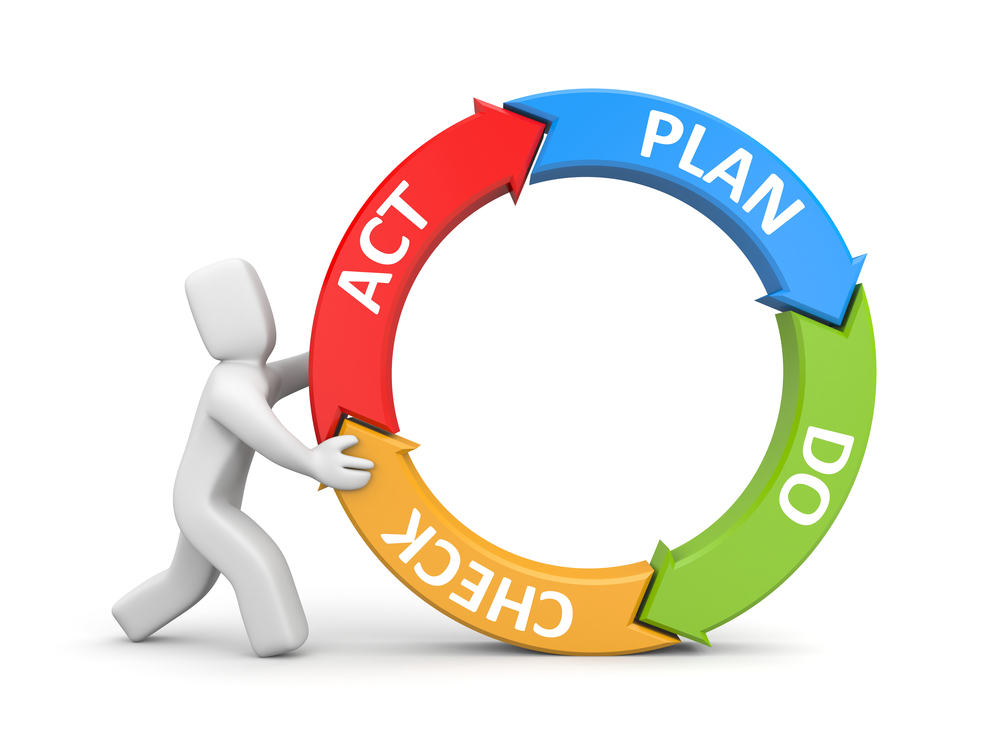
We have to use the Plan-Do-Check-Act method in Figure 27 to analyse the project and the aspects we have to improve or change to get better returns from consumers. It is a continuous cycle that always returns to its starting point in order to start again at another stage of the project to continuously seek the best possible improvements [71].

- Plan: Problems are defined and objectives and methods for improving and correcting these problems are planned
- Do: Implement the chosen method and measure the results
- Check: Check the results and ask what did or did not work and why
- Act: Take action if the results are not good and reuse those that have worked
In our case we want to check the sales targets set at different dates during the year. We will use the do check act method at each stage to check the figures. We are spreading our objectives over 5 years, from 2022 to 2026. We want to start by targeting Portuguese festival organisers in 2022 and then expand across Europe to include 2 to 3 countries each year until 2026. we have listed these objectives in Table 15. We will check if our targets are met each year in September.
| Sales objectives/ year | 2022 | 2023 | 2024 | 2025 | 2026 |
|---|---|---|---|---|---|
| Portugal | 70 000 | 90 000 | 110000 | 130000 | 150000 |
| Spain/Italy | X | 150000 | 170000 | 190000 | 210000 |
| France/Germany | X | X | 150000 | 170000 | 190000 |
| Belgium/Switzerland/UK | X | X | X | 150000 | 170000 |
| Romania/Poland | X | X | X | X | 150000 |
| Number of scanners | 7 | 24 | 43 | 64 | 87 |
| Total (€) | 70 000 | 24000 | 43000 | 64 000 | 87 000 |
To further analyse our results we will use this second method which is to define if we have answered the Six Steps Of The Strategic Control Process [73]:
- Determine what to control
Our main objective is to meet the needs of our users who are between 18 and 35 years old and participate in festivals. We want to facilitate and fluidify their movements in real time in the festival in order to optimize the space and direct them to the different activities and stages.
- Set standards
We will compare the performance of our product with that of existing products from the competition that are very similar to ours. Mainly QR code companies, companies that offer location-based services. We will be able to compare prices, materials, target audience, innovations.
- Measure performance
We analyse and discuss our performance every week by updating our checklist (looking at what is done or still to be done, how to optimise our time). It is also possible to use different tools to visualise this performance.
- Compare performance
The performance of the competition is analysed in order to compare the results with our own and to point out any internal problems that might endanger the brand.
- Analyze deviations
We need to determine why the performance was less than expected. In 2021, the world is experiencing a pandemic that is strongly affecting the economy of every country, it is an uncontrollable external factor.
- Decide if corrective action is needed
Finally, actions are considered to close the gap and three options are chosen: taking action to correct performance, revising the standard, or taking no action.
4.9 Summary
In conclusion, we have now clearly defined our main target and our user target which are respectively the festival organizers and the festival-goers and determined our objectives which are to extend our scanner rent service to Europe festivals in the next 5 years. Based on this market/economic analysis, the team decided to create a product used indoors and outdoors and an application intended for festival goers because we want to orchestrate and fluidize the crowd. Consequently, the team decided to create a scanner which uses the NFC module and can redirect users to an application that gives a map updated in real time and proposes activities to do in consequence and finally it gives the number of people in each area of the festival. We will now focus on our main objectives regarding the eco efficiency in the next chapter.
5. Eco-efficiency Measures for Sustainability
5.1 Introduction
Eco-efficiency is a concept used by companies to achieve much more sustainable development, taking into account environmental impacts. In this sense, this concept contributes to satisfying human needs and providing quality of life without environmental impacts and spending the minimum of non-renewable natural resources. The main objective of eco-efficiency is to bring more profitability using less raw materials, the results of which are notorious in nature. This concept is mostly applied by companies, but it can also be applied by those who want to have more sustainable habits in their daily lives. There are eight fundamental aspects that must be considered when it comes to eco-efficiency, namely:
- Reduce the consumption of materials with goods and services;
- Reduce energy consumption with goods and services;
- Minimize the release of toxic substances;
- Expand the sustainable use of renewable resources;
- Promote the recycling of used materials;
- Maximize the conscious use of renewable resources, promoting sustainability;
- Extend the useful life of the items;
- Assist in educating the public about the management of natural and energy resources.
The crowd orchestration presents opportunities for society and in that sense we want to exploit our ideas to the maximum in order to obtain an innovative product that significantly improves the lives of its consumers, but without forgetting the need to guarantee environmental sustainability. For this we will take into account all regulations on pollution, energy efficiency, human rights, etc [74].Below is the eco efficiency logo in Figure 28.

5.2 Environmental
As is well known, nowadays global warming is a very serious problem and many companies daily compromise the “health” of our planet, spending more and more natural resources and polluting the environment, thus aggravating this problem, as shown Figure 29. In this sense, measures must be taken to avoid these problems as much as possible, as it is extremely necessary to follow an environmental approach. To do this, we aim to reduce gas emissions as much as possible, favor energy savings and use less natural resources and raw materials, make an attractive product and satisfy customers and make our product different from all other products so that differentiate in the market [76] [77].
In case of need, we will use materials that can be reused / recyclable and we will adopt an ecodesign that respects the following 3 certifications:
Cradle to Cradle (C2C): The system certifies and promotes the innovation of sustainable products based on 5 aspects: material health, reuse of materials, use of renewable energies, water management and social responsibility;
ISO 14062: International environmental management standard that assesses the integration of environmental aspects in product design and development [78];
ISO 14001: Standard that allows companies to certify their commitment to the defense of the environment with the management of the ecological risks of the activity they carry out [79].
On the other hand, generally speaking, we also encourage the reduction of their carbon footprints, packaging waste, as companies should know that by having a positive impact on the environment, this can also contribute positively to their financial market.
Thus, we are committed to innovating in sustainability and green supply. To do this, specifically with our product, as previously stated, we will reduce greenhouse gas emissions and explore new low-carbon market opportunities, for which our energy will be obtained through solar panels.


As you can see in Figure 30, our idea is to implement a solar battery, that is, a battery that accumulates electrical energy generated by photovoltaic solar panels so that they can be used at night or on cloudy days. The advantages of this is that solar energy does not pollute during its use which makes it an economically viable solution. One of the problems is that they can have high cost values, and as we have a small budget we may be limited in that regard.
5.3 Economical
The economic pillar of sustainability is an important point to be addressed. The mistake of many companies is to want to profit at all costs (Figure 31), when this should not be the objective of the economic pillar. Therefore, compliance, adequate governance and risk management must be taken into account. As for governance, it is important that the boards of directors align themselves with the interests of the shareholders, as well as with the community of the company and the customers.
It is important to know whether a company uses accounting and transparent methods so that shareholders can vote on important issues and can be guaranteed to avoid conflicts. The economic pillar also provides extreme measures for companies such as abandoning fossil fuels, chemical fertilizers, etc.
On the other hand, it is important to note that it is crucial to save as much material and size as possible, even to limit damage to the environment. This product was also not made to make money, since the main focus is to make world events more organized.
The main objective of this team is to be focused above all on improving the quality of life of the users of this product, that is, working so that they can enjoy the most of the events, without wasting a lot of time in vain due to the lack of organization.

5.4 Social
The social pillar is very important for the success of a company. A sustainable business must have the support and approval of all its employees or any other type of interested parties that work directly or indirectly with the company. In fact, there are several ways to guarantee this type of support, but in short what must be done is to treat employees fairly and ethically. There are many companies that offer maternity, parenting benefits, allow flexible scheduling and even knowledge opportunities such as training, internships, etc. Therefore, a company must be aware of all its actions and act humanely towards its workers, otherwise the work environment will be heavy and negative, which will only contribute negatively to the future work of the company. It is also important to reiterate that it is essential to have job security, in order to avoid tragedies.
In our case, with the company responsible for our product we intend above all to win the trust of employees so that there is a minimum of friendship, which will allow a good team and work spirit. On the other hand, we will respect all the human rights and respect the privacy of the employees. We will also set monthly goals and if those are reached there will be several rewards. Finally, we will demonstrate a sustainability effort through technology, thus attracting the youngest talents, which will always allow us to have alternative and creative solutions.
We will also create social networks with our companies and bet on promoting the product through them, since these days our target audience (young people) spend most of their time on social networks. In this way, we aim to captivate young people with our product.
5.5 Life Cycle Analysis
Life cycle analysis is a scientific method that allows assessing the environmental impact of any type of product / service. According to ISSO 14040 ACV it is the compilation of assessment of inputs, outputs and potential environmental impacts of the product throughout its life cycle. This study is done from the acquisition of raw material or generation from natural resources to its final disposal. This process includes:
- Compilation of an inventory of inputs of relevant energy and materials inserted and environmental emissions;
- Environmental impact assessment;
- Interpretation of results.
In this way, it is possible to compare the environmental impact of different products that have the same function and, thus, one can improve the processes and support public policies and the basis for decision making. The life cycle has four different phases that are interdependent with each other and all follow the ISO 14040 and 14044 standards [81]:
1. Definition of objective and scope:
Firstly, the life cycle, as shown Figure 32, has a very explicit definition that determines the context of the study and explains how and for whom the results will be announced and there are several technical details that can be named:
- Functional unit that allows alternative products / services to be compared and studied;
- System boundaries;
- Assumptions and limitations;
- Allocation procedures;
- Method and impact categories selected.
2. Inventory analysis:
Involves the creation of an elementary flow inventory for a product system.
3. Impact assessment:
The importance of potential impacts on the environment is assessed.
4. Interpretation:
Systematic technique to identify, quantify, check and evaluate the information of the results.
Life Cycle Analysis has 6 stages, namely:
- Resources, Materials;
- Manufacturing, Production;
- Assembly;
- Retail, Distribution;
- Use;
- Recycle.

5.6 Summary
Sustainability is a very important factor to take into account throughout our project. As we are going to work directly with people, we have to be ensure the product respects them, as they cannot in any way feel observed or invaded in their privacy. On the other hand, as already mentioned, we will always adopt, whenever possible, measures that take into account the environmental aspect.
Our product will work directly with mobile phones or other electronic devices and, in this sense, it is important to reiterate that electronic sustainability includes environmental issues that must be taken into account and that is why toxic chemicals, recycled, and, reduce carbon emissions generated from the use of the devices.
We also intend to create a list of environmental, health and safety objectives in order that the users themselves and even the employees of the company feel motivated to respect the environment of our planet.
On the other hand, we are going to be strict with our suppliers and for that reason we are going to present social and environmental sustainability clauses. Therefore, we want our company to be as transparent as possible. For that, we will have an open communication with workers and our customers, be clear and precise and recognize possible problems and find solutions in the project.
The next chapter is about Ethical issues and is interconnected with eco-efficiency.
6. Ethical and Deontological Concerns
The aim of this chapter is to present the ethical aspect of our project. In this chapter will be discussed: engineering ethics, sales, and marketing ethics, environmental ethics and liability.
6.1 Introduction
The word deontology derives from the Greek words for duty (deon) and science (or study) of (logos). The doctrine of duties and obligations, and a view opposed to consequentialism - if one wants to achieve a good result, one must reach it by the right road (“the end does not justify the means”). Deontology is in an ethical theory- formulated by Immanuel Kant, which assumes the existence of moral norms that should be universally applied and have the character of moral laws. Kant believed that ethical actions follow universal moral laws, such as “Don’t lie”, “Don’t steal”, “Don’t cheat” [83]. Deontology requires that people follow rules and perform their duties [84].
Ethics a branch of philosophy concerned with the study of morality and the creation of systems of thought from which moral principles can be derived. Ethics is based on well-founded standards of right and wrong that prescribe what humans ought to do, usually in terms of rights, obligations, benefits to society, fairness, or specific virtues. Personality, mentality, values, culture, education, social environment, personal experience shape individual morality. It is very important to consider the influence of society and the people producing the product when creating a product because each of us has a different vision of the word “ethical” [85].
Deontological ethics “in philosophy, ethical theories that place special emphasis on the relationship between duty and the morality of human actions. Our behavior is often impacted by the words “must” or “should”. In deontological ethics, an action is considered morally good, not because the product of the action is good, but because of the characteristic of the action. Deontological ethics also raises awareness of the consequences of each individual's action” [86].
Our device has a great connection with deontology, as it contributes to the improvement of the pandemic situation in the world. Our task is to design a device that solves the problem of disorganization and overpopulation in festivals.
6.2 Engineering Ethics
Engineers should demonstrate honesty and integrity. They must act in accordance with the standard of professional behavior and adhere to the principles of ethical conduct. Engineering has a direct and vital impact on the quality of life for all people. Therefore, it is important that the work performed by engineers is fair, impartial and just, and dedicated to protecting safety and welfare. Fundamental canons, rules of practice, and professional obligations are below [87]:
I. Fundamental Canons
Engineers, in the fulfillment of their professional duties, shall:
- Hold paramount the safety, health, and welfare of the public.
- Perform services only in areas of their competence.
- Issue public statements only in an objective and truthful manner.
- Act for each employer or client as faithful agents or trustees.
- Avoid deceptive acts.
- Conduct themselves honorably, responsibly, ethically, and lawfully so as to enhance the honor, reputation, and usefulness of the profession.
II. Professional Obligations
- Engineers shall be guided in all their relations by the highest standards of honesty and integrity.
- Engineers shall at all times strive to serve the public interest.
- Engineers shall avoid all conduct or practice that deceives the public.
- Engineers shall not disclose, without consent, confidential information concerning the business affairs or technical processes of any present or former client or employer, or public body on which they serve.
- Engineers shall not be influenced in their professional duties by conflicting interests.
- Engineers shall not attempt to obtain employment or advancement or professional engagements by untruthfully criticizing other engineers, or by other improper or questionable methods.
- Engineers shall not attempt to injure, maliciously or falsely, directly or indirectly, the professional reputation, prospects, practice, or employment of other engineers. Engineers who believe others are guilty of unethical or illegal practice shall present such information to the proper authority for action.
- Engineers shall accept personal responsibility for their professional activities, provided, however, that engineers may seek indemnification for services arising out of their practice for other than gross negligence, where the engineer's interests cannot otherwise be protected.
- Engineers shall give credit for engineering work to those to whom credit is due, and will recognize the proprietary interests of others [88].
It is the inevitable duty of an engineer to take care of the prestige of his profession, to perform it properly. Engineers and their employers must take care of continuous improvement of their knowledge and especially of their profession, disseminate their knowledge, share their experience, create opportunities for education and training of employees.The engineer should work only within the scope of his/her competence. Any decision must be argued based on well-established reasoning. Engineers must properly inform buyers about any information that concerns them. As professionals, engineers are expected to commit to high standards of conduct (NSPE). An engineer should reject any article that could lead to a dangerous situation that threatens human rights, because the main objective of the project should be to ensure the welfare and development of the society. After using someone else's work, achievements etc the engineer must remember to mention the source of the information to prevent plagiarism.
In conclusion, the engineering profession involves the use of ethical standards. One should avoid mistakes and approach this profession with great responsibility. The purpose of this profession is to create something new, to improve the quality of human life.
6.3 Sales and Marketing Ethics
More and more people believe that marketing is used to manipulate audiences to “push” products they don't need. People are more aware of ads that mislead them. Ethics in sales and marketing refers to behavior toward the customer. Through ethical behavior, the customer is treated with respect, honesty, sincerity and integrity. The customer's choices should be paramount. Ethics in marketing means that every marketing expression inspires the customer to buy, but does not mislead the customer. [89] [90].
Business ethics is a reaction against inappropriate practices that have a negative impact on society. Ethical behavior will help you maximize your efforts in sales and marketing, both short-term and in the long run. It is worth mentioning that nowadays many companies do not adhere to ethical values. Often a lot of products do not bring as many benefits to the customer as promised. We come across production for quantity rather than quality. Because of this, we often encounter products whose capabilities are exaggerated, which do not bring any benefits, or which do not work properly. In social media we can meet many famous people who promote a product, so that we believe that by buying the product we have made the best choice because it was advertised by a person we adore, admire. Every company is struggling to win in the competition of the market. The constant presence of competition in the market inevitably leads to a clash between different players. To avoid this phenomenon, ethical marketing can be used. If we want our product to be sold in an ethical way, we must work in an honest way,. In the field of sales and marketing, as in any other field, there are many regulations and standards that must be followed. Some general ethical marketing principles have been created [91]:
- Truth and honesty are appreciated and respected in all types and marketing channels.
- Marketing personnel must be guided in their professional activity by their personal ethics.
- Advertising for your product should not be confused with news and entertainment.
- The marketers will be honest and transparent about who sponsors their products.
- Consumers must be treated fairly.
- Consumer privacy is appreciated and respected at all times and at all costs.
- Marketing must comply with rules and regulations issued by the government or organizations.
- Ethics should be discussed openly and honestly in all marketing decisions.
Our team wants to create an unique product, so we follow all the rules and laws to keep everything in the ethical realm. We want to be honest with our customers as well as possible competitors. We will advertise our product clearly and truthfully to our audience. Our team will be guided by personal ethics in their professional activities.
Our next topic discussed will be environmental ethics, which refers to the environmental aspect of our product, which we will also emphasize.
6.4 Environmental Ethics
Environmental ethics is the relationship between humans and the environment and teaches what role ethics plays in this. Environmental ethics teaches that humans are part of society as well as plants, humans, animals. Therefore, it is important to follow laws, morals, and ethics because without the aforementioned beings, there would be no ecosystem [92].
When designing a product, it is important to use environmentally friendly elements in order to protect ecological systems. The most important requirement is to create products from materials that can be recycled and dismantled. The final product must have a positive impact on our planet. Therefore, we will strive to ensure that our scanner achieves maximum performance with minimum energy consumption. We will also ensure that the materials are environmentally friendly. Thanks to use new modules such as NFC, reducing our environmental impact by offering rental and reusing packaging, and finally, adapting to government restrictions. Another thing is that our app can be used at different events, not just festivals, so its versatility can benefit on many levels.
6.5 Liability
All companies that create and sell a product are responsible for it. Liability is the legal aspect by which a company is protected from harm and provides a guarantee that the product is compliant. The product must be easy and safe to use.
Regarding our project, we will comply with the following EU Directives:
- Machinery legislation (2006/42/CE 2006‐05‐1705‐05‐1717) guarantees a high level of protection for EU workers and citizens, ensures the safety of the machinery and its components entering the European market [93].
- Electromagnetic Compatibility Directive (EMC) (2004/108/EC 2004-12-15) Electrical devices can interfere with each other due to the nature of electric current. EMC is intended to regulate side effects (for example, electromagnetic radiation) between electronic components [94].
- Low Voltage Directive (LVD) (2014/35/EU) ensures that electrical equipment within certain voltage limits provides a high level of protection for European citizens, and benefits fully from the single market [95].
- Radio Equipment Directive (RED) (2014/32/EU) establishes a regulatory framework for placing radio equipment on the market. Ensures no interference and data security regulation in radio communication with other devices [96].
- Restriction of Hazardous Substances (ROHS) (2014/32/EU) in Electrical and Electronic Equipment Directive- restricting the use of hazardous substances in electrical and electronic equipment to protect the environment and public health [97].
Besides EU Directives we will make sure that the logo and product name will not infringe the property of another company. We also intend to register our brand with the team to ensure that we have the right to use the name and logo of our product.
6.6 Summary
Any company that decides to launch a product should observe ethical codes in order to protect the environment and create a good reputation among customers. Our team is committed to ensure that the product will be of the best quality, with high standards and fair to competitors and customers. Our device will use environmentally friendly materials. Also, we will use engineering knowledge and take all the valuable tips from the coordinating teachers. In this way, the product will not be defective nor dangerous for the consumer. We have include referencs to all used sources.
The next chapter will be about the development of our project.
7. Project Development
7.1 Introduction
Taking into consideration the previous chapters, we will showcase the process of bringing our ideas to life and creating the concept from the early sketches all the way to the final version. Our team's choices are justified by tables comparing each component by price, features and the characteristics.
7.2 Architecture
While creating our black box diagram, we did not take into consideration the internal components and their links to one another. Only the inputs and outputs of the external components were relevant.
The first version of black box diagram presents the user's smartphone that shares data with the internal NFC module of the scanner. The NFC scanner is connected to the power grid (initial idea was to apply our device on indoors events). The counting system receives information about scanned smartphones and counts people that entered a given zone of the event. The team did not choose the final back-end system that would be responsible for counting festival participants’ smartphones scanned in the given area. Our device is equipped with a QR code printer that generates code to be scanned by the user’s phone, and then the given code enables the user to be put through to the application updated in real-time according to the information about the crowd density provided by the NFC scanner-counting system connection. Festival attendees will get information about different concerts, crowd density and incentives about alternative activities according to the crowd density in the exact zones.
The initial black box diagram is represented below as Figure 33.

Along the way we found ways to improve our concept and the way it operates. The QR code printer was not a good addition since it had many disadvantages, some of which are the creation of queues, unnecessary use of paper, etc.
Keeping this in mind, we moved on to an updated black box diagram illustrated in Figure 34. The user presents his smartphone to our scanner which has an NFC module integrated. ESP32 system connects with a remote database thanks to the integrated WiFi module. ESP32 is responsible for counting festival participants’ smartphones scanned in the given area. The user will be redirected to the ScanGo application which gives the user a map of the festival which is updated in real-time, providing information such as the crowd density, possible paths to take to reach different stages, incentives for alternative activities and concerts taking place.

7.2.1 Exterior design
At first we decided to use only one steel post to support the scanner. Placing two scanners back to back makes it more convenient and this way more people will be able to use our product at one time. An early sketch containing the front and side view is represented in Figure 35.

After putting the main idea on a piece of paper we have transposed the scanned sketches on an illustrating software. Afterwards we traced the images so we can get both views with clean and sharp lines. The digital version is represented in Figure 36.

The team moved on to a more modern and improved shape of the scanner, while placing two of them back to back creating a pentagonal shape. The scanner is composed of three rectangular pieces hollow on the inside, with the internal walls having a thickness of 5 mm. With this shape (Figure 37 ), the internal components are protected from external factors such as weather, people with bad intentions trying to steal, etc.

The scanner is dimensioned so that it is easy to access for every user, with the total height of 130 cm. The inclination angle of 30 degrees provides a good water flow in case of rain. The total dimensions are shown in Figure 38.

7.2.2 Microcontroller pins
On average, a typical microcontroller can have from 6 to 60 pins on it, to which you’re expected to attach communications connections, power connections and input and output connections. Every microcontroller’s pins can be configured differently, and most times one pin will have more than only one function. This process of combining functions to one pin is called pin multiplexing.
Every pin has a different name, specific to the hardware used. The pin numbering usually starts from the top left corner, which is often marked with a dot [98].
We have created a pin diagram illustrated in Figure 39 to display the connections between the ESP32 microcontroller and the NFC Module.

7.3 Components
RFID vs NFC
Radio Frequency IDentification and Near Field Communication are wireless communication technologies with many similarities.
RFID’s main purpose is to track and analyse automatically a tag attached to an object using radio waves. RFID has uses such as: tracking personnel, managing inventory, tracking products, managing the supply chain [100].
NFC is a wireless form of data exchange, that allows devices to communicate by being in the proximity or touching. Just like Wi-Fi or Bluetooth, NFC is a wireless technology that sends information using radio waves. Its principle is based on RFID which existed before Near Field Communication that transferred signals using electromagnetic induction.
We chose to use NFC in our product since most of today’s smartphones have it integrated straight from the factory and it has advantages such as[101]:
- versatility: it is capable of doing more than just wireless payments;
- convenient: effortless fast scanning without having to reach for wallet;
- instant linking between the devices;
- already implemented;
- enhanced safety[102].
7.3.1 Components comparison
A comparison of the microcontrollers can be found in Table 16:
| Name | Price | Size | Pros and cons | Picture |
|---|---|---|---|---|
| Seeeduino V4.2 [103] | 10,60 € | 68.6 mm x 53.4 mm | + Cheap + Use of a micro-USB port for powering and programming the board. |  |
| Arduino Uno [104] | 15,50 € + 4,50 € Shipping | 68.6 mm × 53.3 mm | +Reliable; +Accessible due to its popularity; -Size; -Small processing power. |  |
| Arduino Nano [105] | 11,90 € + 3,70 € Shipping | 18 mm x 45 mm | +Smaller size than Arduino Uno; +Size -Uses a Mini-B USB port. |  |
| Seeeduino Nano [106] | 7.71 € + 4 € Shipping | 43 mm x 18 mm | +Price; +Size. |  |
| PocketBeagle [107] | 25,10 € | 56 mm x 35 mm x 5 mm | +Has space for analog inputs, digital IOs and other peripherals- Wi-fi & Bluetooth not integrated; |  |
| NodeMCU v2 [108] | 6,13 € + 0.83 € Shipping | 49 mm x 24.5 mm x 13 mm | +Price |  |
| Raspberry Pi Zero W [109] | 27,50 € + 4.50 € Shipping | 65 mm x 30.5 mm x 5 mm | + Wi-fi & Bluetooth integrated; + Adaptability; Expensive |  |
| Atmega [110] | 10.64 € | 37.4 mm x 6.76 mm x 3.28 mm | -Due to the larger feature size of their internal transistors, it withstands electrostatic discharge. |  |
| ESP32 [111] | 12 € | 18.00 mm × 25.50 mm × 3.10 mm | +Wi-Fi & Bluetooth integrated; +Fast speed; - Not recommended for beginners |  |
Firstly, we wanted to implement the Arduino Uno system. It is one of the most common Arduino boards available, and it has some user-friendly features, including large 2.54mm pitched sockets for connecting to external devices and a large USB B connector. Next, we were suggested to focus on the ESP32 system rather than the Arduino Uno according to complexity of ESP32. Our team did the research about the differences between Arduino Uno and ESP32 and presented the results in Table 17:
| Arduino Uno | ESP32 |
|---|---|
| No wifi module integrated | Wifi module included |
| No Bluetooth integrated | Bluetooth integrated |
| Easier configuration | Longer configuration |
| Better choice for new makers | More demanding according to programming skills; advanced version of Arduino |
| More expensive | Cheaper |
| Slower | Faster |
| Downloading the Arduino IDE and plugging in Arduino required; any modifications are required | Additional libraries required in order to use Arduino IDE |
To sum up, the ESP32 dev kit is actually cheaper than Arduino Uno, which means that we get a more powerful board for a lower price. At the level where you use your existing Arduino skills to work with the ESP32, we can treat the ESP32 as a supercharged Arduino Uno: faster, better in many respects [112]. The ESP32 is a powerful 32 bit microcontroller with integrated Wi-Fi and Bluetooth 4.2. Due to the low cost combined with great power and the opportunity to connect the ESP32 to many other electronic devices, the microcontroller is well suited for IoT projects [113] .
Batteries comparison can be found in Table 18:
| Name | Price | Size | Characteristics | Pros and cons | Picture |
|---|---|---|---|---|---|
| LiFePO4 Battery [114] | 3.99 € + 4.50 € Shipping | 32 mm x 70 | Number of recharges: 5000; minimum discharge voltage: 2,5 V; maximum charge voltage: 3.65 V; working voltage: 3.0V - 3.2V; Energy density: 100 Wh/kg … 265 Wh/kg | +Suitable for the ESP32 when the main goal is to power a circuit for a maximum time; - Very complicated to charge the battery while in use |  |
| AAA NiMH Batteries [115] | 6,13 € + 4.50 € Shipping | 10.5 mm in diameter and 44.5 mm in length | Minimum discharge voltage: 0.8V; Working voltage: 1.2 … 1.25V; Maximum charge voltage: 1.4V; Number of recharges: 1000; Energy density: 60 Wh/kg … 120 Wh/kg | -Low energy density |  |
| 9V Alkaline Block Battery (6 AA Alkaline Batteries connected in series) [116] | 1,75 € + 4.99 € Shipping | 48.5 mm x 17.5 mm x 26.5 mm | Minimum discharge voltage: 6V; Working voltage: 9V; Maximum charge voltage: 9.9V; Number of recharges: 500; Energy density: 80 Wh/kg | +No external components needed; - short lifespan of battery powered system |  |
| AA Alkaline Battery [117] | 6,68 € + 14,00 € Shipping | 49.2–50.5 mm x 13.5–14.5 mm | Minimum discharge voltage: 1V; Working voltage: 1.5V; Maximum charge voltage: 1.65V; Number of recharges: 500; Energy density: 80 Wh/kg | -When the ESP32 starts up, it pulls so much current out of the AA alkaline batteries that the voltage drops entirely to zero, resetting/crashing the ESP32 |  |
The team focused on finding the best type of ESP32 and the battery that will be able to charge our device for many hours of festival. Our choice is TTGO ESP32 with battery 18650 support and OLED display (0.96 inch). The device has a built-in battery charger for battery 18650 and micro USB port that can be connected to the solar panel responsible for charging our device.
The following Figure 40 depicts TTGO ESP32:

In the 3D model we have modeled the connection between the solar panel and the ESP32 microcontroller, using a micro USB cable. Figure 41 showcases a close-up of the two components attached.

The chosen battery is battery rechargeable XTAR 18650 3000mAh Li-ion presented in Figure 42 below:

The team wanted to implement the idea of solar panel charging in the device to use it for outdoor festivals. On our list of materials there was a portable monocrystalline silicon solar panel in a PET package, with an integrated voltage regulator output of 5V with a USB plug. It can supply plenty of power in various environments to prevent the system from shutting down. The solar panel and other electronic components are included in the following Table 19:
| Component | Provider | I (A) | Ah | U (V) | P (W) = I x U | P (kW) | kWh |
|---|---|---|---|---|---|---|---|
| ESP32 wemos | botnroll | 0.5 | 4 | 3.6 | 1.8 | 0.0018 | 0.0144 |
| Bateria de Lítio Samsung INR18650 25R | innpo | - | 2.6 | 3.7 | - | - | 0.00962 |
| Solar panel | botnroll | 1 | - | 5 | 5 | 0.005 | 0.005 |
| Diode LED | ptrobotics | 0.02 | - | 3.4 | 0.068 | 0.000068 | 0.000544 |
| NFC module | electrofun | 0.03 | - | 3.3 | 0.099 | 0.000099 | 0.000792 |
According to the power table results we got to know that our ESP32 wemos would handle the internal components that are provided in the List of materials in Deliverables.
From the specification of the ESP32 [120] we could calculate the power consumption of the device and the battery work time. Results of the calculations are presented in Figure 43:

From the calculations based on the specification of ESP32 and the data about the battery we know that our device can work for 16 hours.
The teachers provided us with other components than TTGO ESP32 and rechargeable XTAR 18650 3000mAh Li-ion. The final components are the LOLIN32 microcontroller and the compatible battery 103450 3.7 V 1800mAh that comes along with the JST connector, which allows it to connect directly to the ESP32 board. When it is connected, the board is constantly running, therefore we needed to include the power switch into the battery circuit in order to be able to turn it off and on. Mentioned components are presented respectively in Figure 44 and Figure 45 :


The teachers provided us the solar panel with the dimensions 120×120 mm and 5V voltage regulator to connect with the panel. The received solar panel does not have USB plug, only wires already mounted to the panel. Mentioned components are presented in the Figure 46 and Figure 47 :


7.3.2 3D Printing materials
We decided to print some of the parts of the device in the 3D printer. Our team needed to compare PLA and ABS - two of the most popular 3D printing materials. All can be extruded on basic 3D printers and they are among the most affordable filaments available today. Table 20 shows the comparison between PLA and ABS:
| PLA | ABS |
|---|---|
| Higher strength | Lower strength |
| Higher printability | Lower printability |
| Higher stiffness | Lower stiffness |
| Lower durability | Higher durability |
| Lower heat resistance | Higher heat resistance |
| Same chemical resistance as in case of ABS | Same chemical resistance as in case of PLA |
ABS, while weaker and less rigid than PLA, is a tougher filament. ABS is a bit more durable, but it does require more effort to print than PLA because it’s more heat resistant and prone to warping. PLA is a user-friendly thermoplastic with a higher strength and stiffness than ABS. With a low melting temperature and minimal warping, PLA is one of the easiest materials to 3D print successfully, that is why we would like to use this filament in small elements 3D printing [121] .
7.3.3 Ground anchors
ScanGo scanner will consist of two parts as presented on Figure 37. To place stably our bottom part on the ground we took into consideration two possible choices. First of them was a ground screw that replaces the need to dig traditional foundations and lay concrete. As the name would suggest, these foundations are screwed into the ground to depths typically between 1.2m and 5.0m. Ground screws offer an efficient, practical, and mess-free installation, allowing to progress with the build immediately. Figure 48 shows different types of screws and how they are fixed in the ground [122].
In comparison to concrete foundations, when using ground screws you avoid any unnecessary surface sealing of the soil. The soil ecosystem is not disturbed and it remains intact. With ground screws, you can plan exactly where you want your foundations to go so that you can avoid damaging these cables running under your foundation [123].

To visualise how the ground screw would be attached to our scanner, the team created it in 3D format and the result can be seen in Figure 49

Despite all of the advantages that ground screw has, its cost is relatively high, and special construction machinery is needed, that is why we considered another choice which are angle brackets/corner which are a small pieces of metal that have been angled to form an L shape to provide a secure join between two pieces of material. Most types of angle brackets are designed for universal application and they are easy to use [125]. The high quality of ground screws come with a high price tag. While prices of angle brackets start from 30 cents [126] to over 35 euros [127] depending on the type, ground screws placed over flat ground and using average soil conditions cost around 100 euros [128]. Figure 50. shows an image of an angle bracket.

7.3.4 Solar chimney
In order to take full advantage of the shape of our device, we will drill holes in the bottom and top of it (Figure 51) to create a solar chimney effect. The scanner is tall and empty on the inside, so the warm air will travel through the bottom holes and will exit to the top, cooling our internal components. Once the hot air rises up, it draws in more air from the bottom. This will be used to drive passive ventilation. How the airflow is produced can be visible in Figure 52 [129]:


As a result of the airflow created inside the device, dust and other particles can get in and damage the internal components. This is why they will be placed as seen in Figure 53 inside of a box. They will consantly be thermally in contact with the airflow just divided by the walls of the box.

7.4 Wooden concept
To bring our idea to life we decided to create the prototype out of wood, as represented in Figure 54. The material used for the bottom and middle part of the support is pine wood and the top and internal components box of the scanner is plywood.

7.4.1 Connectors
The base and the pillar are connected by brackets which are fastened to the inner part of the pillar with screws. The way they are fixed is visible in Figure 55. On the other side, two metal parts are also attached with screws (Figure 56). This gave us the outline of our prototype.


We then created our box in which the components will be placed and scanning completed, which is the upper part of the prototype. The box was glued together, but for enforcement on the inside of it a wooden frame was created. This way it is more stable and it opened the door for fixing it to the main pillar using angl brackets. These connectors are shown in the Figure 57.

We attached plywood to the top of the box using rubber and screws, thanks to this attachment we can open and close our box. It shows Figure 58 and Figure 59.


7.5 Packaging
We want to offer a service to festival organisers by renting out our scanners and installing and uninstalling them as well as transporting them from one festival to another. For this we need a packaging that is resistant because it will be handled several times for installation and transport. That's why we chose to place an easy-to-handle opening/closing on the top of the packaging, which doesn't require tape or tearing the cardboard. The “ears” on either side of the lid will fit into the slots and stabilise the whole thing. In addition, we have reinforced the strength on the underside to prevent damage.
To create the packaging we used the Picador software. The result is a 3D version of the packaging, which you can see at different step of the assemblage in the Figure 60,Figure 61, and Figure 62 .


This packaging is made of corrugated cardboard, as you can see in Figure 63 for a better resistance to shocks. Inside we will find wedges made of honeycomb cardboard, which replaces the traditional expanded polystyrene which is not recycled and is often found in nature. This cardboard can be used for a variety of shapes, which will allow us to adapt to our scanner and protect it as well as possible.

7.6 Functionalities
We are going to develop the functionalities of our product which are essential for the consumer.
- The first function of our scanner is to connect with the users' phones thanks to the NFC module (every phone is equipped with an NFC module, which is a wireless form of data exchange that allows devices to communicate with each other by coming close or touching them).
- The second function will be the ability, after connection, to open ScanGo application on the user's phone that will give access to a map of the festival.
- The third function will be to provide real-time information to the festival-goer about the different concerts and activities by indicating them on the map via the application. Moreover it will give the current number of people in the chosen area.
- This saves time for festival goers and reduces the risk of overcrowding for the organisers.
- We offer a multi-day scanner rental service with transport, installation and start-up of the scanners. This saves organisers time and money as they can adapt the number of scanners they wish to hire each year.
7.7 Tests and Results
7.7.1 Device tests
7.7.1.1 Configuration of back-end system - ESP32
First of all, to start working with our ESP32 system (in our case the component received from the tutors was WEMOS LOLIN32) the configuration was performed and based on installing the ESP32 Board in Arduino IDE. Figure 64 presents the steps of ESP32 configuration:

First step is to open the preferences in the Arduino IDE. Next we have to paste the URL visible in Figure 64 in the additional boards manager section. After that we can go to the board manager and type “ESP32” in the search box to find the board we want to install. As a result all available types of ESP32 are available in our Arduino IDE. Next step was to run the given program presented in Figure 65.

7.7.1.2 Diode LED
To check if diode LED connection works, we used following components:
- Lolin32 microcontroller;
- diode LED;
- resistor 100 Ohm;
- jumpers;
- breadboard.
The connections between Pins were as follows:
- Pin 33 → resistor;
- Resistor → (-) diode LED;
- Pin GND → (+) diode LED.
To make diode LED blink we applied a “Blink” program from examples as depicted in Figure 66:

Some modifications of the code were required since WEMOS LOLIN32 does not have the LED light built-in. Modifications are presented on Figure 67 and Figure 68:


Diode LED is on during the whole work of the device, it turns off when the device is not charged.
7.7.1.3 NFC Module
Next step was to investigate NFC module work. Firstly the following connections between ESP32 and NFC modules were created as presented on the following Figure 69:

On the same webpage as Figure 69 there was a program responsible for NFC communication which we adjusted to our needs. In Figure 70 one can find the code of this program:

First we needed to initialize the MFRC522 in order to make it work. Then we also initialized WiFi connection using the network name and password. Next the program was waiting for the device with NFC turned on. When the smartphone is scanned, the program makes the HTTP request to the server in order to send the data to the database.
7.7.1.4 Battery connection, solar panel, power switch
In our prototype we used battery 103450 provided by the teachers. The battery is connected to the LOLIN32 through the built-in charge port. LOLIN32 connects with the solar panel through the wires with the usage of voltage stabilizer. The circuit is turned on using the power switch placed on the back side of the scanner. The final circuit diagram is presented in the Figure 71:

7.7.1.5 Sending data to the database
Our final program consists of three different combined codes:
- timer - given program from Arduino IDE; this part of the code is responsible for establishing the WiFi connection;
- given program checking NFC work; base of the final code since NFC is the most crucial part of our program;
- HTTP request - taken from the given program from the Internet sending HTTP request; responsible for sending the request to the server program which updates our database with the number of people in each zone.
The program is presented in the Figure 72:

First we needed to initialize the MFRC522 in order to make it work. Then we also initialized WiFi connection using the network name and password. Turning on the diode LED was implemented in the same way as in the previously explained blink program in the Figure 68.. Next the program is waiting for the smartphone with NFC turned on to appear nearby. When the smartphone is scanned, the program sends the HTTP request to the server in order to update the data in the database. When it is updated, we get the response with 200 status code. The crucial thing is that we need to give the HTTP address of the server that we want to connect to.
To make the work of our system clear, the team prepared a diagram depicting the role of HTTP request and connection with database. Figure 73 below represents the diagram:

To be sure that the program performed correctly, after scanning on the screen we obtain 200 HTTP status code that means “OK” and assures us that the number of people in the database was changed correctly.
On the previous diagram we can see the server program. Server program consists of the controller and repository. Controller redirects the information to the repository and next repository is responsible for database operations as shown on the following Figure 74:

Our database is in the form of table as presented below on the Figure 75:

Our server application was developed using IntelliJ IDEA. This is the environment which allows us to develop applications using the Java programming language. We wrote the code using Spring framework. The program code is presented in Figure 76:

Our program code is responsible for finding the row according to the zone number in the table from the database. In case of an increasing number of people in the zone, the number of people is increased by 1. When the number of people decreases, the only condition that needs to be taken into consideration is that the number of people needs to be different from 0 (cannot be negative) and is decreased by 1.
7.7.1.6 Problem with NFC
Our team faced some obstacles while working on the functionalities of our device. We could scan the NFC static tag from the phone and get its data. We tried to scan the RFID-RC522 module on ESP32 and there was no possibility to obtain the data on the phone, since RC522 works just as a reader (it reads the input from the phone but the phone does not recognize it in the reverse direction). That’s why we came up with an idea of double scanning. First scanning performed between smartphone and NFC module attached to ESP32, is responsible for informing ESP32 that someone enters the new zone. Second one performed between the NFC tag (containing the zone number) and the smartphone is responsible for receiving the data of how many people are in the zone that the user is located in. We will use two different signs on the stickers (presented on the Figure 77 below) to put on our device and make it understandable for the user.

7.7.2 Mobile Application Tests
7.7.2.1 NFC Tag
To obtain the zone number from the static tag, we needed to write data on it first. It was done thanks to the application called NFC Tools, that can be found in the Google Play store. NFC Tools can read and write your NFC tags. By passing your device near an NFC chip, you can read the data it contains and interact with the content [132].
In Figure 78 are represented the steps of writing the data (the number of the zone) on the static tag.

First in the “WRITE” section we needed to add the record in the form of data which is the number of the zone. Then we hold the tag close to the device to let it write the data. To check if writing the data works, we need to go to the “READ” section and scan our tag.
7.7.2.2 Android Application
In order to develop our mobile application we had to download the program to write the code. The most popular one is Android Studio that we used. That is part of the system together with our ScanGo scanner.
Firstly, we prepared the design of the application icon presented in the Figure 79. The icon is showcased in three different sizes starting from big down to very small, to illustrate that the logo is visible and easily recognisible even scaled down to icon size on a smartphone screen.

Next design was the application interface. Figure 80 below presents home screen of the application:

The home screen depicts the number of people in the current zone. Whenever the user scans the NFC tag with their smartphone, the current zone number and number of people in the given area is displayed. Besides this data, the festival participant can pick one from the activities on the home screen. After picking the activity the user is redirected to the map presenting the crowd density, points on the map of the festival and paths to take by the user. Schematic design presented in Figure 81:

In Figure 82 there are the steps of generating icon for mobile application in Android Studio:


The effect of our work is visible in the Figure 83 presenting the screenshot of the mobile phone with installed ScanGo application:

Before generating an interface of an android application the team needed to focus on the best method of creating the map that can be implemented in our system, universal and used in every place in the world where the festival takes place. In order to orchestrate the crowd during festival events we needed to create our own map with the specific paths and zones of the festival. Initially we made a general map of the festival in canva, attached in the Figure 84.

We assumed that our festival was 60 hectares and that scanners were placed on the borders of the zones every 50 m, we also placed a scanner at each entrance, to sum up the number of scanners we would need 50. Initially we assumed that the scanners would not be back to back. For example, we assumed that zone 1 has 3ha, zone 2 has 7ha etc. The total came out to be about 60ha. Taking zone 1 as an example, since it has 3 ha, we assumed that it has more or less dimensions of 150 m x 200 m. So there are 3 scanners on one boundary (150 m) and 4 scanners on the other boundary (which has 200 m). Unfortunately this option was very vague and did not work.
So we started looking for a more accurate program into which we could plot our map and use for the application. Our found program was OpenGeofiction which is a collaborative platform for creating fictional maps. [133]. It is based on the OpenStreetMap software platform. The program allowed us to create our area, mark and sign both zones and points/services. We made some sample paths, for example from the scanner to the toilet. In case of 50 scanners we need 25 spots for double back-to-back scanners. Figure 85 attached below shows a map in this program.

Finally, we used the layer on real area in GoogleMaps created on our own. With this application we could get the exact dimension of the area, it was: 55.5 ha. Comparing with the previous methods, this one turned out to be the most accurate and beneficial. It gave us the possibility to choose a real area located on the map. Our choice was the Parque da Cidade in Porto. This idea makes our application universal for every place in the world. By getting more accurate dimensions, we spaced the scanners every 150m, but still stayed with 50 back-to-back scanners (25 spots). Figure 86 illustrates the map using Google Maps.

After choosing the proper map, we could start creating an application interface in Android Studio. The result of our work is visible in Figure 87:

Thanks to the very intuitive interface in Android Studio we were able to create our application interface using drag and drop feature. Later we made our screen interactive using the code shown in Figure 88:

OnCreate method is performed when the application home screen starts. Firstly, the setContentView method is called in order to assign the layout we prepared previously. Secondly, for each text view and button we needed to assign the corresponding element from the layout using findViewById method, which takes an unique ID of each layout element as a parameter.
The next step is to check if the user has NFC enabled. If not, there is a prompt displayed with the information “NFC disabled. Please turn it on.”. Later we tried to find a way to inform the application that the NFC tag was scanned, so we used the intent class from the Android library [134]. Then thanks to this intent we were able to recognize that the NFC tag was scanned, which allowed us to obtain the zone number previously saved on the NFC tag. Then the phone used the zone number from the NFC tag to send the HTTP request to receive the data about the zone (number, crowd density) from the database as presented on Figure 73 request and connection with database and display it on the screen (which means successful scanning).
Our buttons were not interactive yet. To make them clickable, we needed to assign them a click event. In our case after clicking each button the user is redirected to the map with specific activities.
According to various chosen activities the user is redirected to the new screen with the map. Here is the code responsible for choosing the right zone numbers (Figure 89):

At the beginning we declared the arrays containing zone numbers with the specific activities. Then we used the data (origin zone, destination) obtained from the previous screen to assign specific zone numbers according to the chosen activities. Based on that there is a HTTP request sent to the server application in order to obtain the zone number that is less crowded and display the path leading to specific activity in this zone. Next, we displayed the paths to the specific points on the map thanks to exporting the paths from the layer in Google Maps into KML format, that enables importing the the data from the maps to the android application.
7.7.3 Stress simulations
In order to test the resistance of our prototype, through the Fusion 360 software, where the prototype was developed, we did a Safety Factor Test (Figure 90) and a Stress Test (Figure 91). The force we applied was 600 N, which is the average force a person applies when pushing an object.


7.8 Summary
After the research concluded in the state of art we have began brainstorming ideas about our product. Creating the black box diagram and initial sketches layed down the foundation of what we would have to bring to life. Having down the technical components and how they would be placed internally we could have advanced further in developing the concept.
With the 3D model completed and the internal components placed we managed to bring the prototype to life at scale by using wood and additional angle brackets and screws for support. Once everything was screwed in place and secured we moved on to develop the application and further tests have been made in order to perfect the process of being redirected.
In the upcoming chapter, we will describe the conclusions and talk about the future development of our product.
8. Conclusions
8.1 Discussion & Future Development
ScanGo allows you to organise events using your Scanner and your application as explained and referred to in the previous chapters. After performing the tests referred to in the previous chapter, we draw several conclusions about what can be improved in future work.
- For example, the LED Diode could eventually be used not only to inform if the device is working but also to inform the user that his Scanning is complete or not and for that he could find a way to make the LED Diode blink, change colour, etc.
- Another thing that could be improved is the relationship between the Scanner and the Application, since in our case the application has to be opened and subsequently scanned for the user to receive the information on the numbers of people in a given zone, etc. What could be improved was to implement a system that would make the application open automatically after scanning and instantly receive the necessary information.
- In the future, we also want to expand the application to iOS and not just Androids. Also we should focus in the fact that the application only can be installed either by connecting the phone and running Android Studio or by sending to the user directly the installation file. This is not efficient in terms of reaching a largar number of users, that´s why the application should be uploaded to the Google Pay Store.
- On the other hand, in the future, we have to improve the stability of our scanner, since it is necessary to put weights on the bottom to keep it upright. The upper part, where the electrical system is located, also needs to be improved, as we have to find a way to close the lid easily.
- As stated before, our original product will consist of aluminium and polypropylene on top. To prevent the top from having too much damage due to UV rays and heat, it is important that the polypropylene used has stabilisers that allow and contribute to a better resistance to them.
- Finally, obviously, a larger budget would have allowed us to choose better quality materials, which would allow for a better and more efficient product.
8.2 Conclusion
The initial goals were all achieved and even surpassed, once we built the prototype of our wooden product and created the application for Android SmartPhones. After several tests, our ScanGo product worked the way we expected. Teamwork and communication were the key to the success of this project, as we meet all deadlines and distribute existing tasks according to the skills of each team member. This experience also contributed to increase the culture, as we worked these months with people from other countries and above all to make new friends.
Bibliography
Will be added automatically by citing, in the body of the report, entries specified in BibTeX format and stored in the http://www.epswiki.dee.isep.ipp.pt/doku.php?id=refnotes:bib file
PS - If you have doubts on how to make citations, create captions, insert formulas, etc. visit this page with examples and select “Show pagesource” to see the source code.